Generative AI was used in this project. I am not proud of it, and it was used as a last resort. I do not condone the use of AI in art and design, and I do not use it in any other of my work.
Hallowed is a trading card game (TCG) set in a Catholic/religious world; it is a competitive 2-player game. It draws heavy inspirations from Catholic and other various religious imagery and is imitative of existing trading card games like Pokemon, Magic the Gathering, and Inscryption. This also means that it does not function like baseball card-collecting, as those cards are purely collectable and do not serve any gameplay purposes.
This project lasted a full two semesters, and was displayed fully completed in a campus senior studio show. I created everything concept-wise including the game mechanics, title, wordmark, card design, rulebook, and playmat. The game itself is also fairly playable as I play-tested it numerous times with friends and family.
The project was also set on a personal schedule, making the final product a little more challenging to visualize.
The Drafting Stages
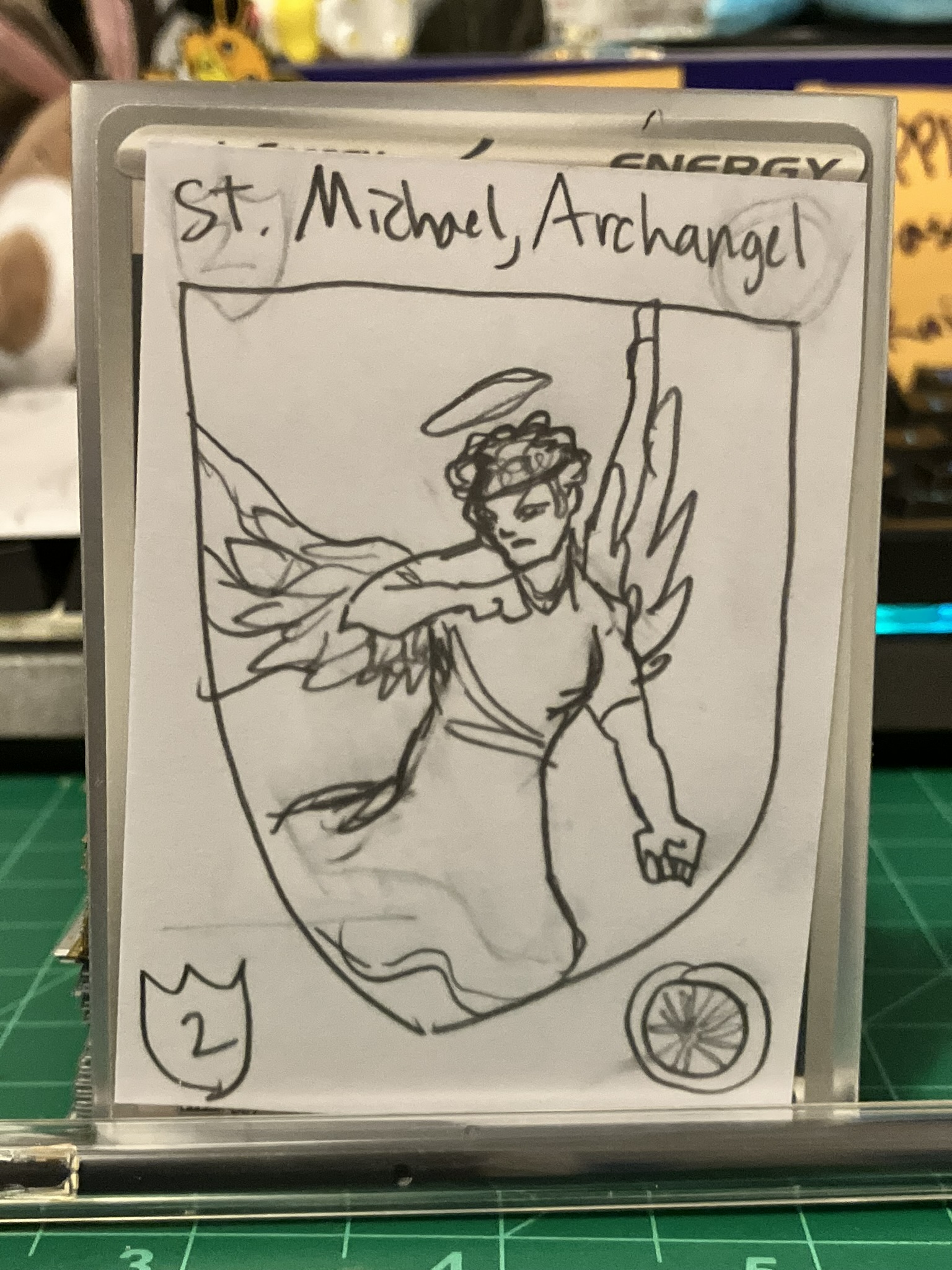
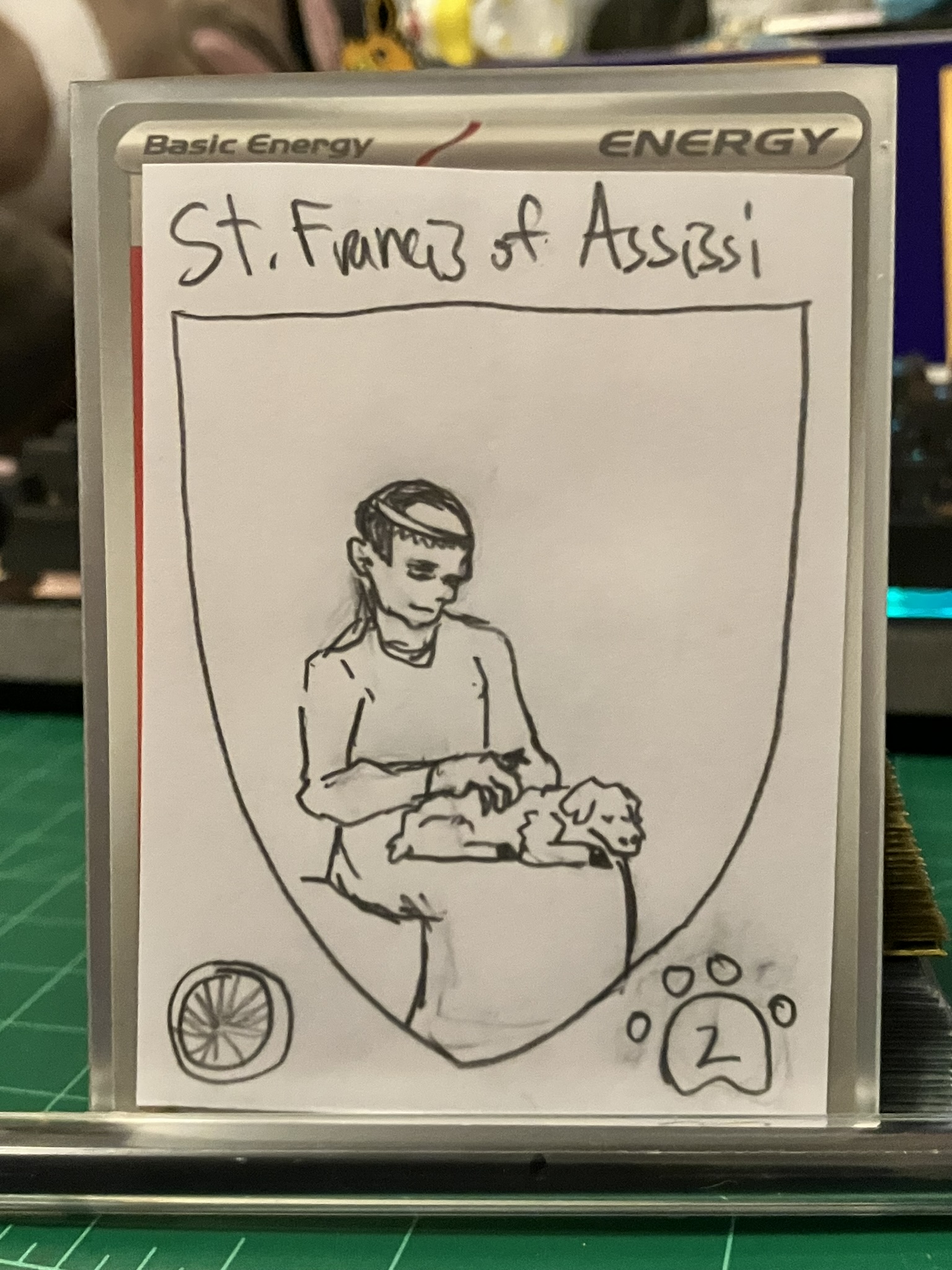
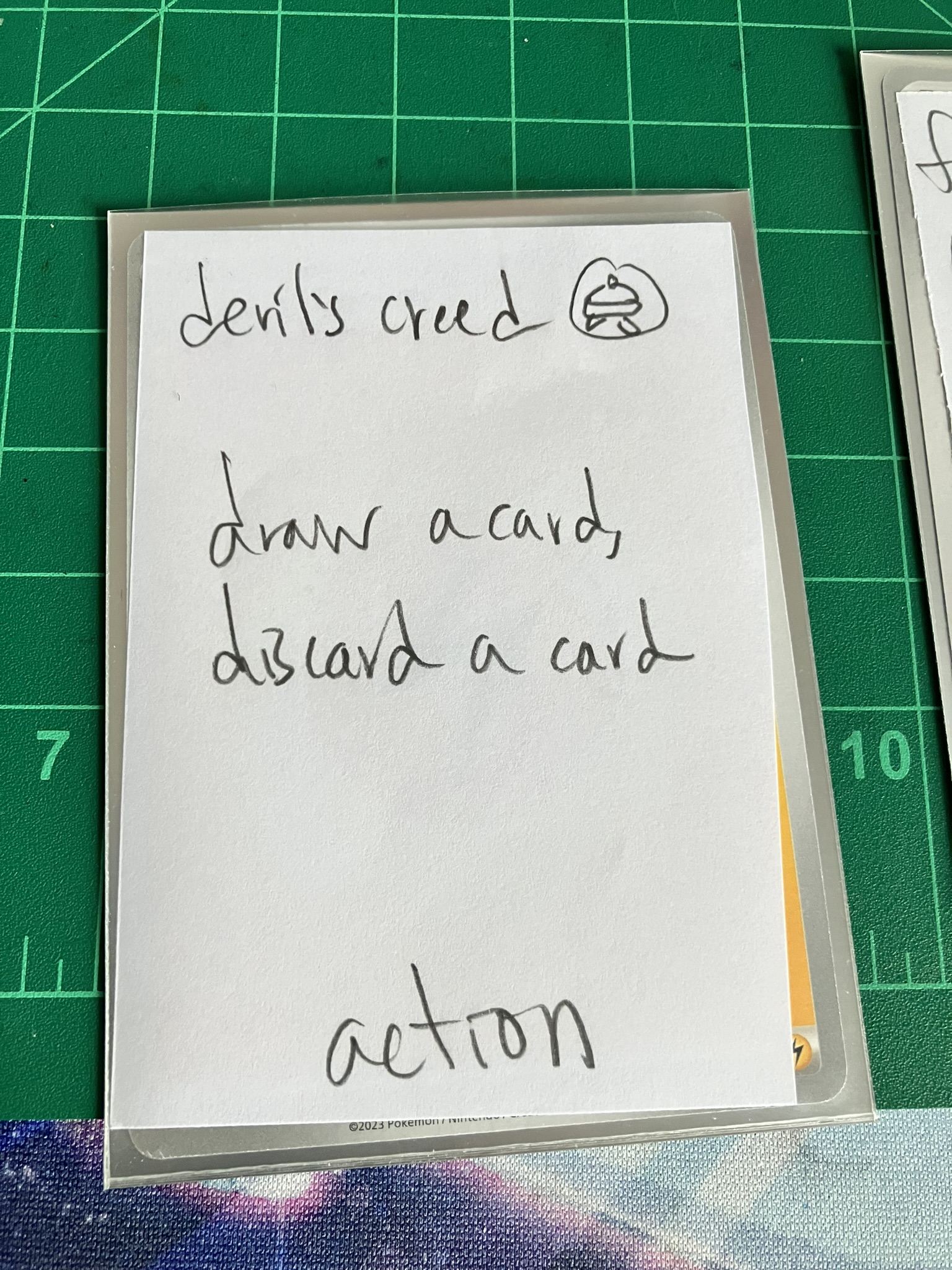
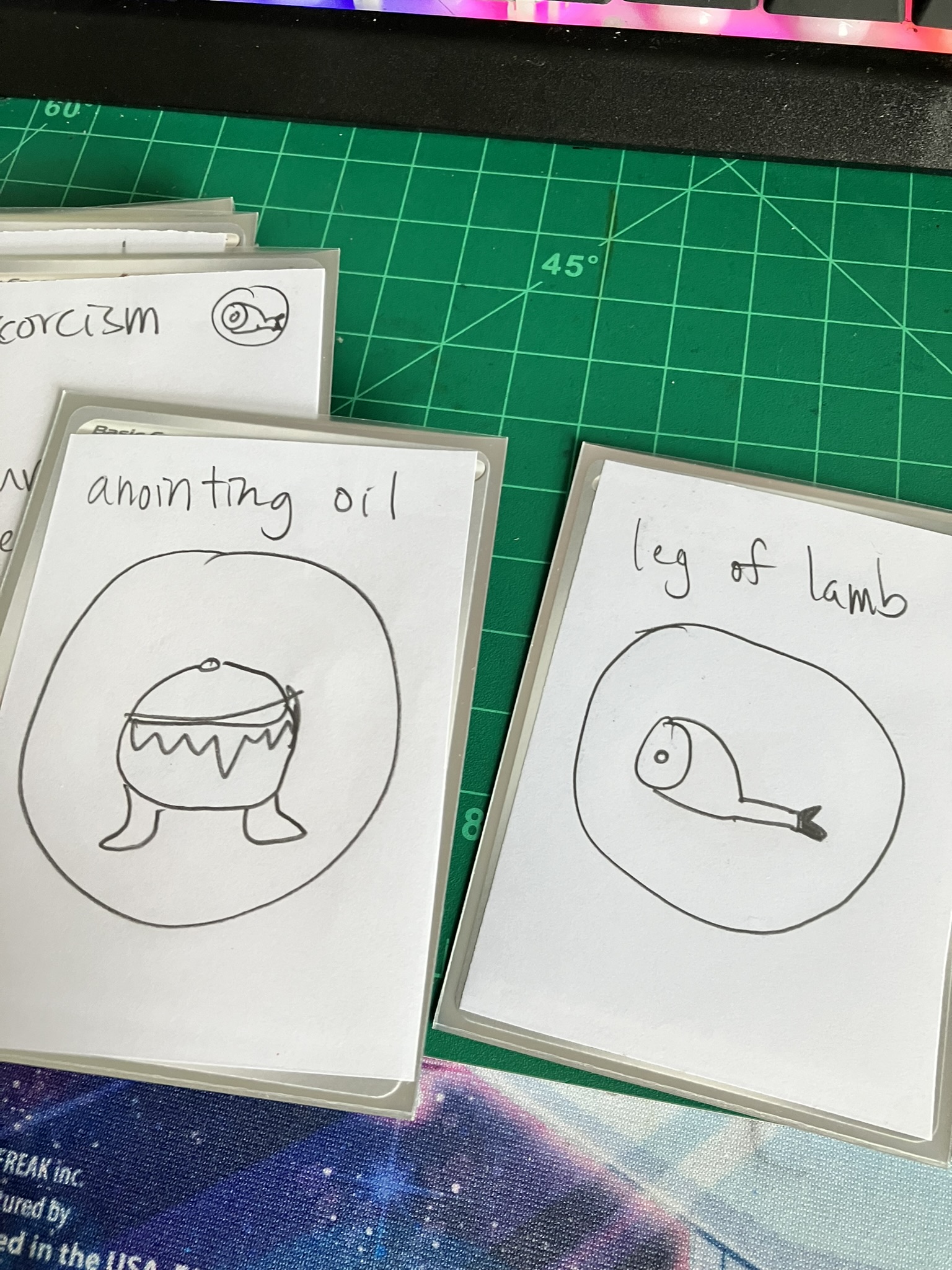
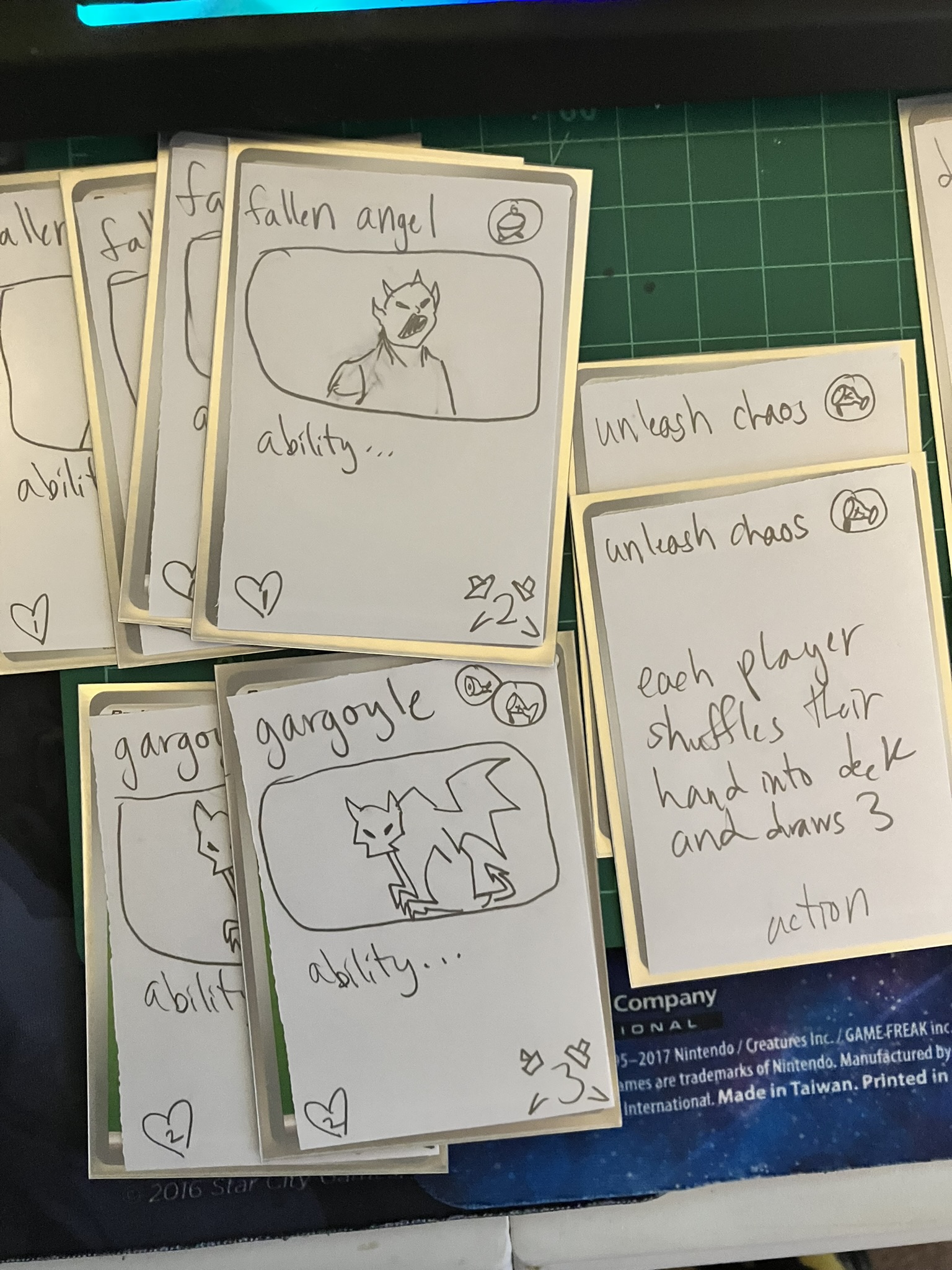
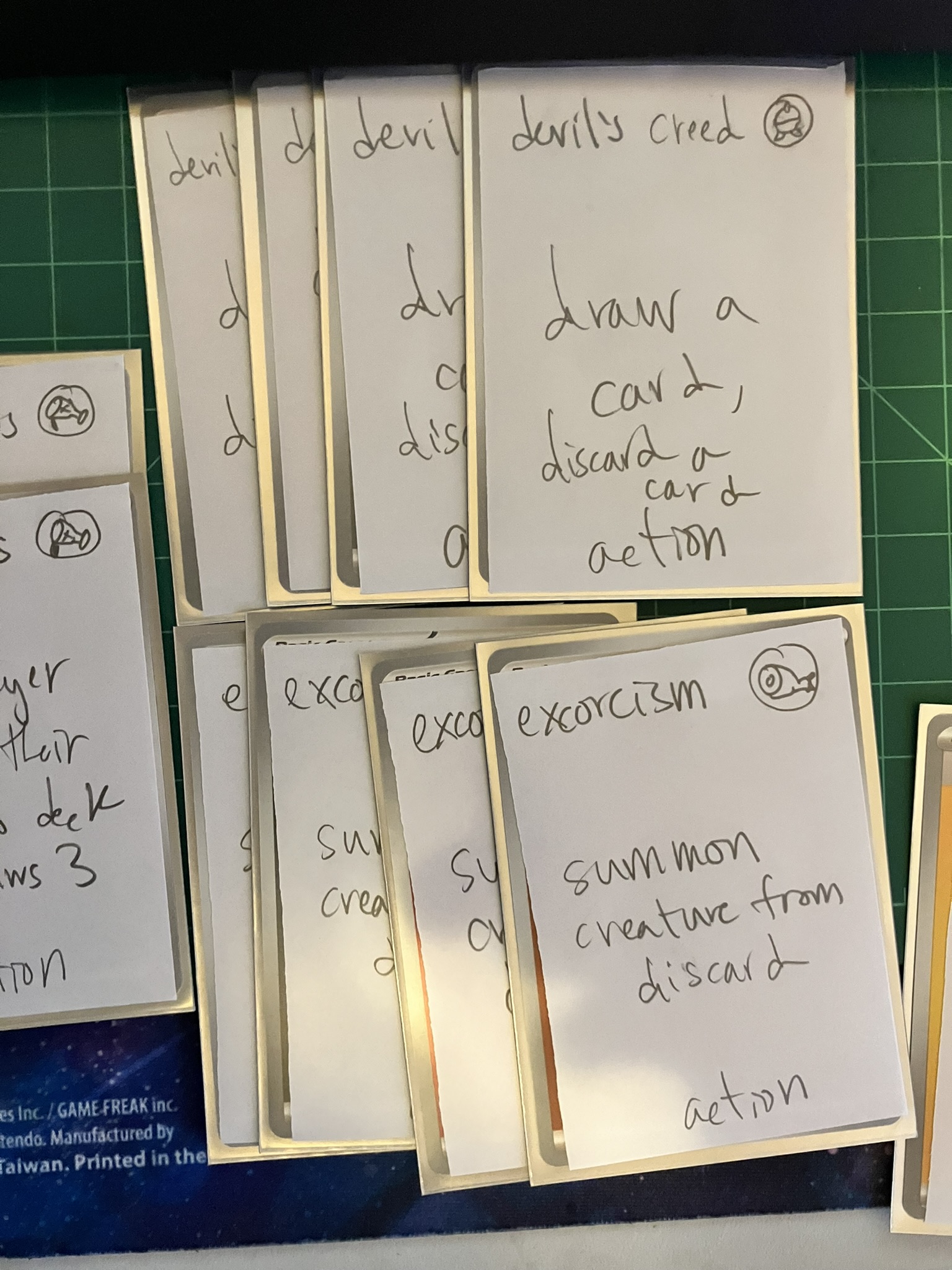
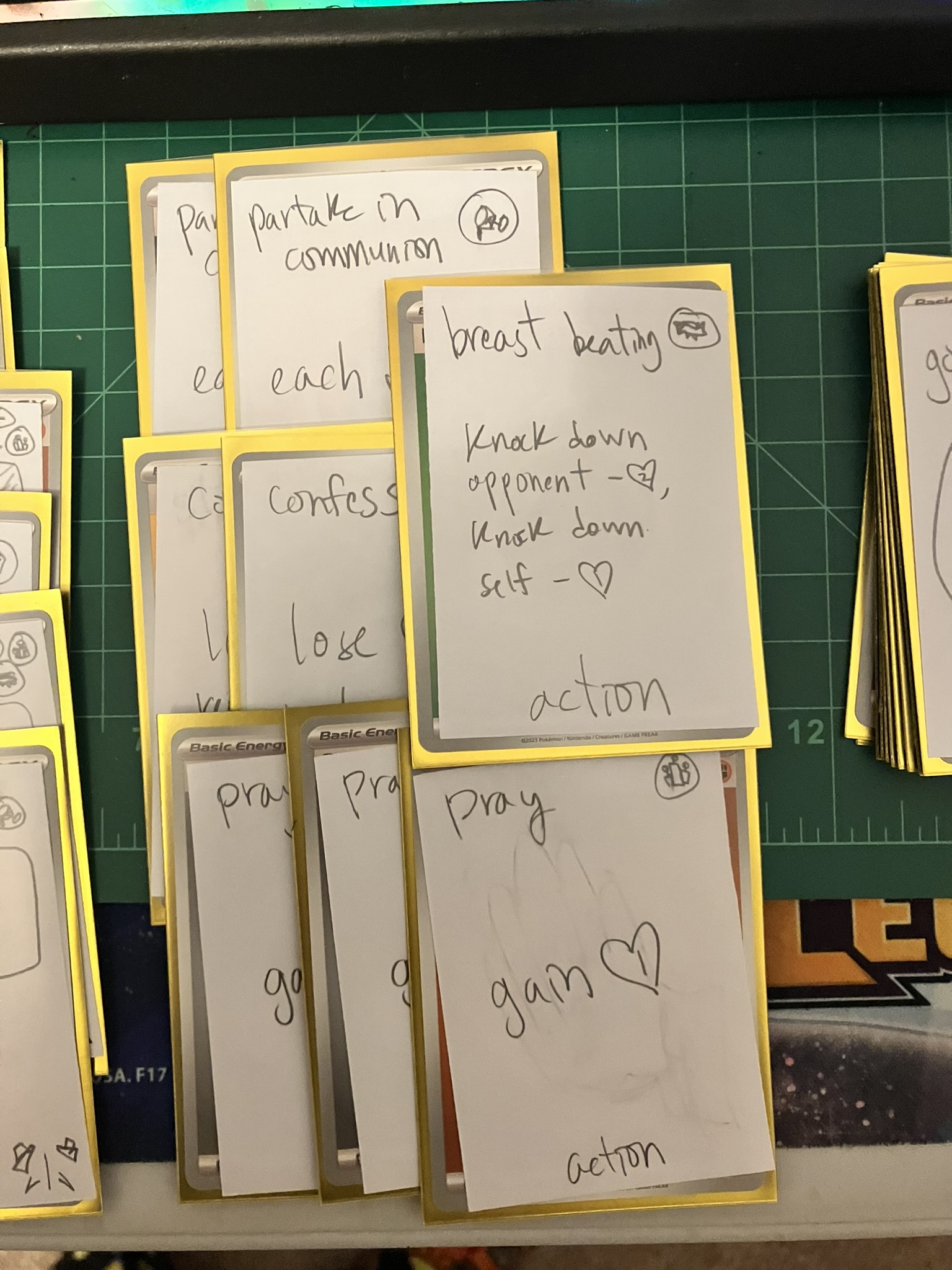
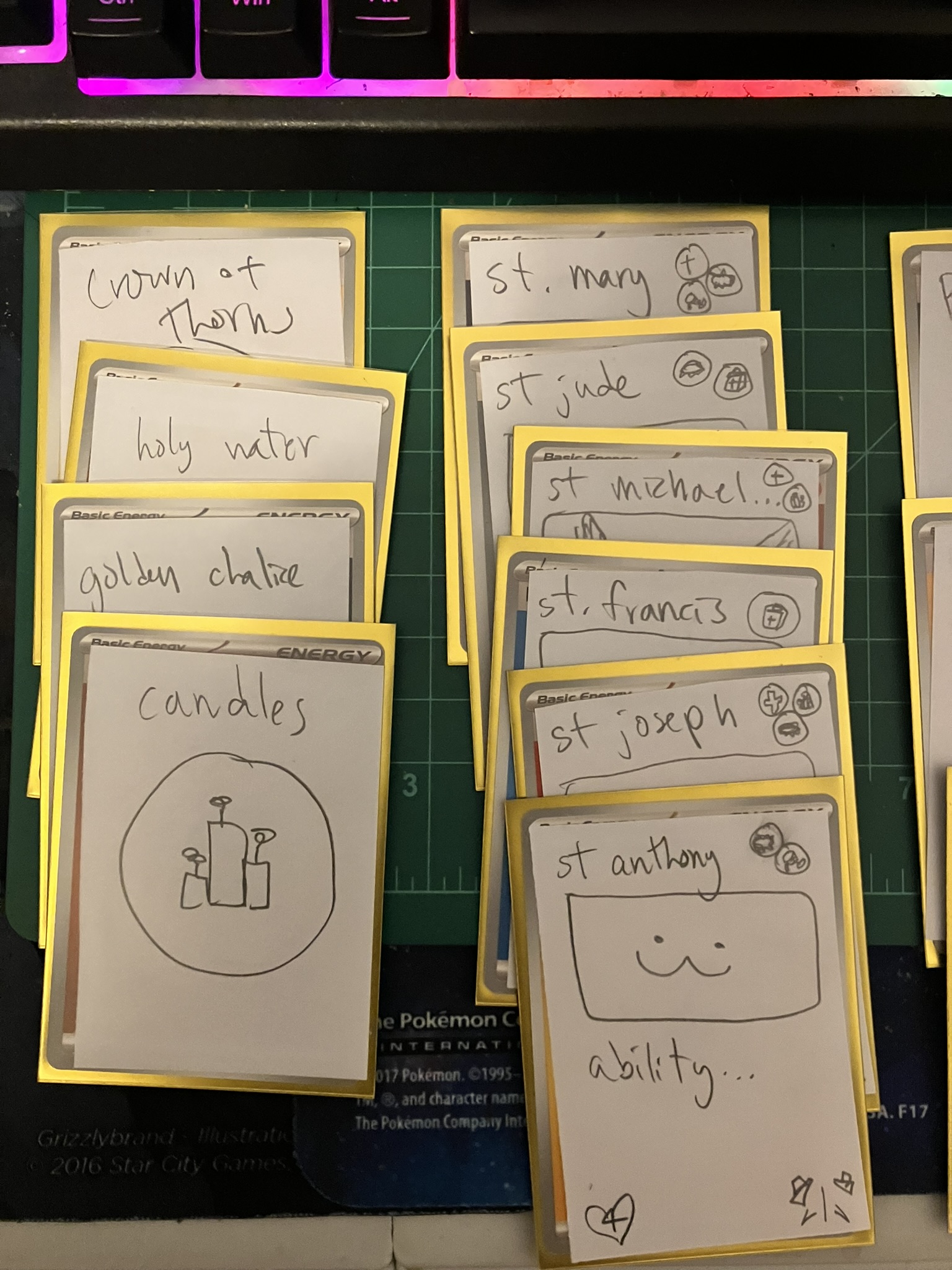
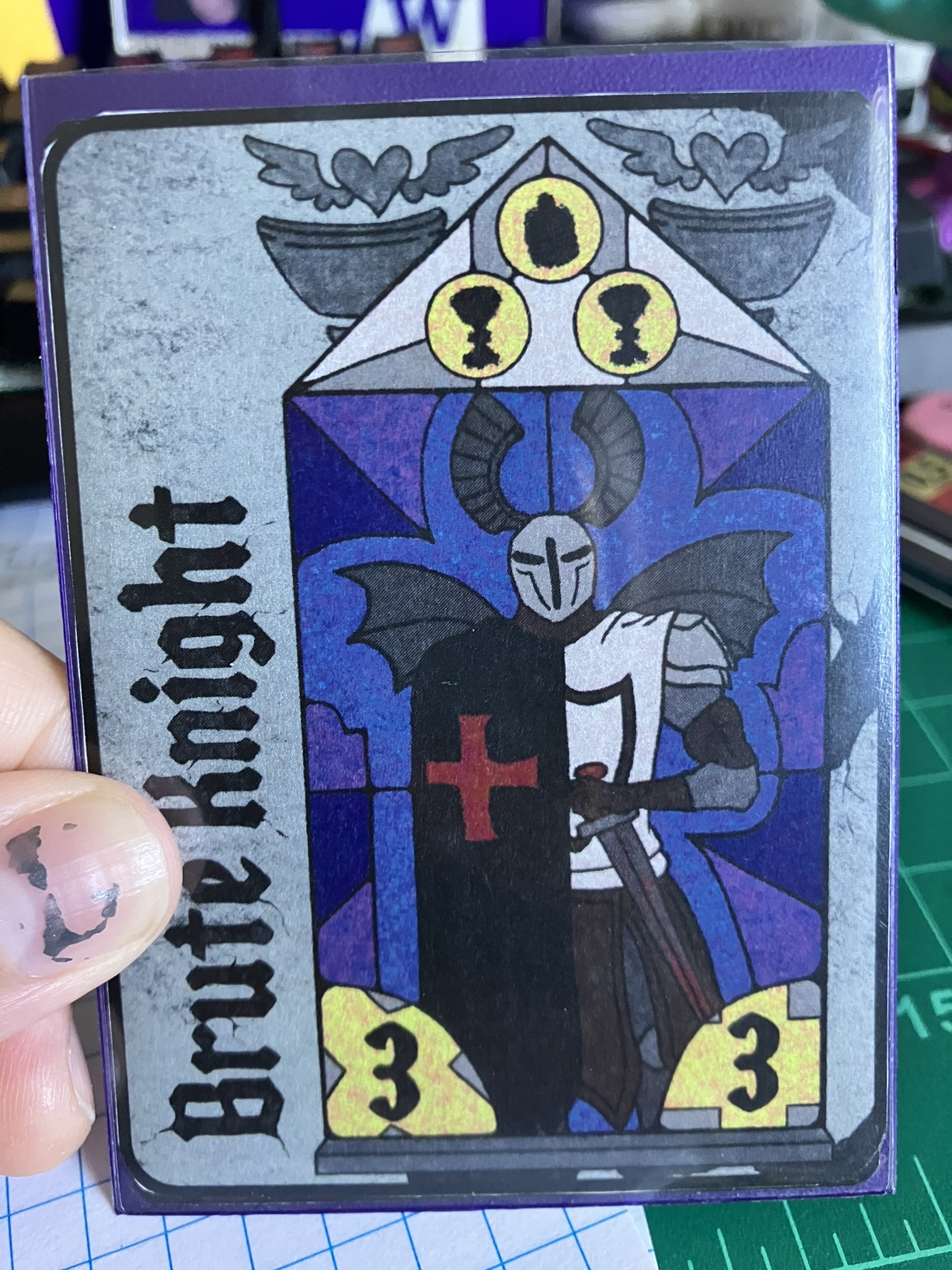
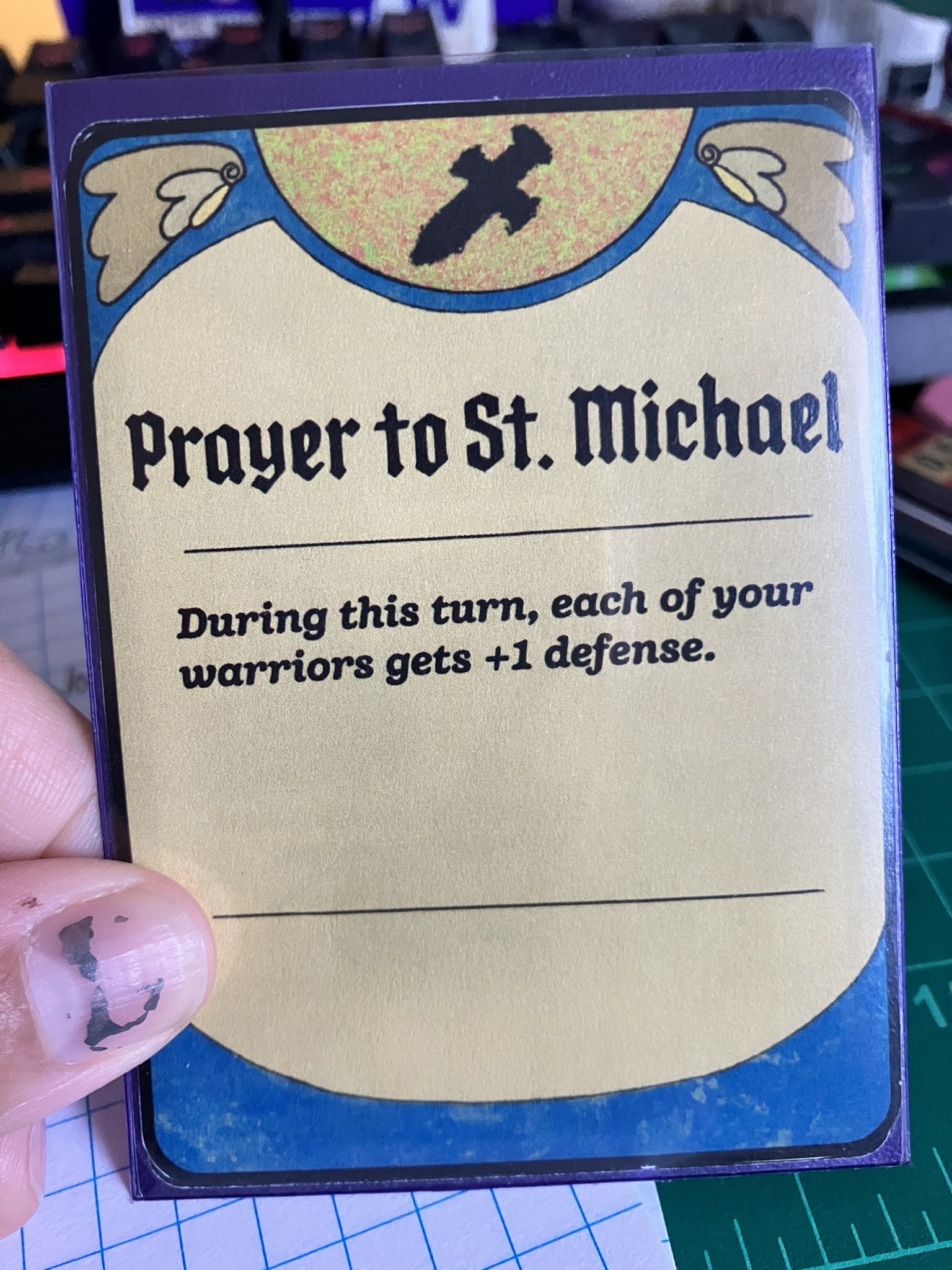
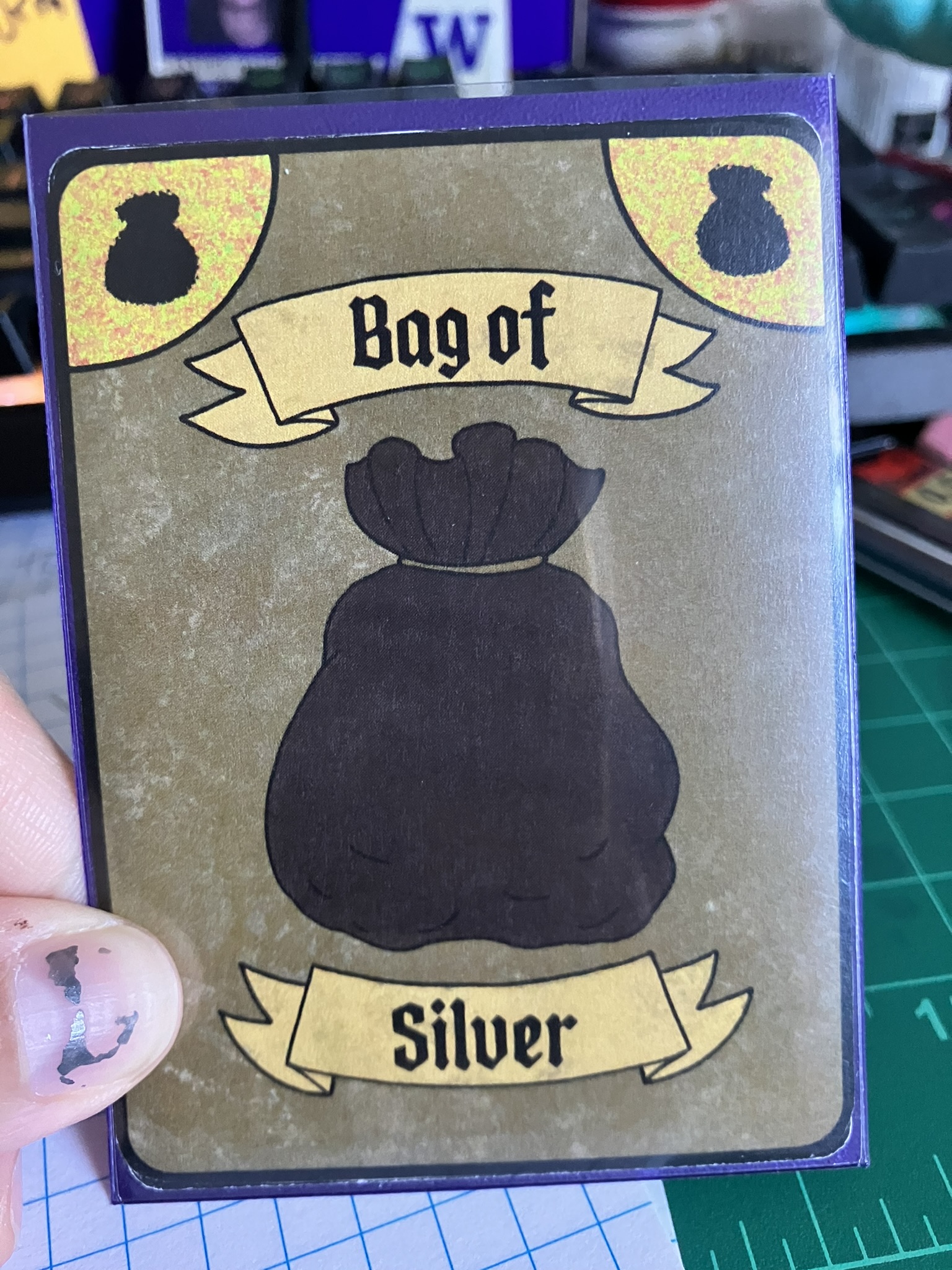
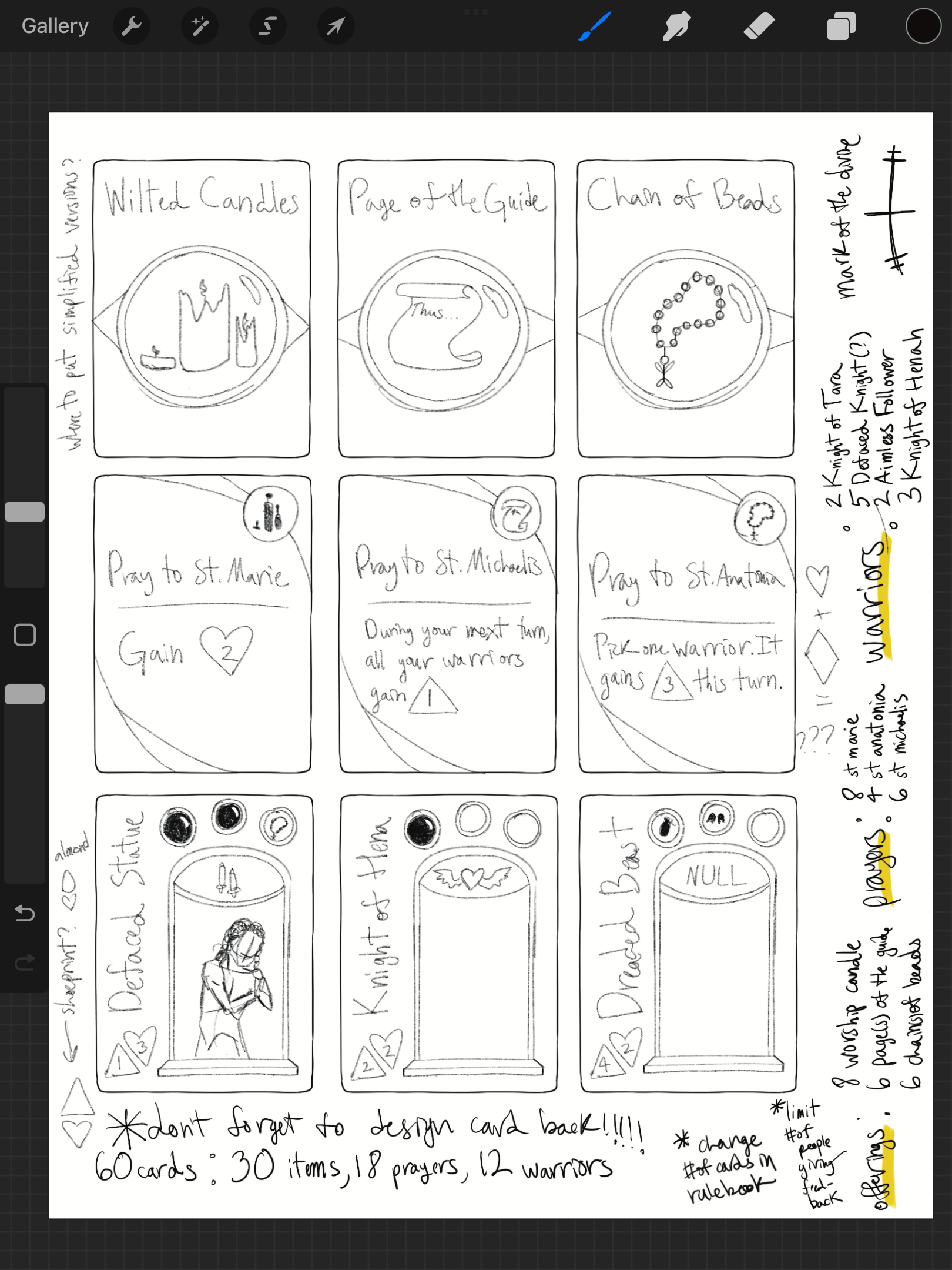
At the very beginning of the project, a timeline was made to put each physical component on a set deadline, and it began with the playing card designs. I started drafting by sketching out designs on true-to-size paper cutouts, which helped tremendously with putting together the layout of each primary type of card. The primary types are as follows: character cards, action cards, and resource cards as warrior cards, prayer cards, and offering cards, respectively.
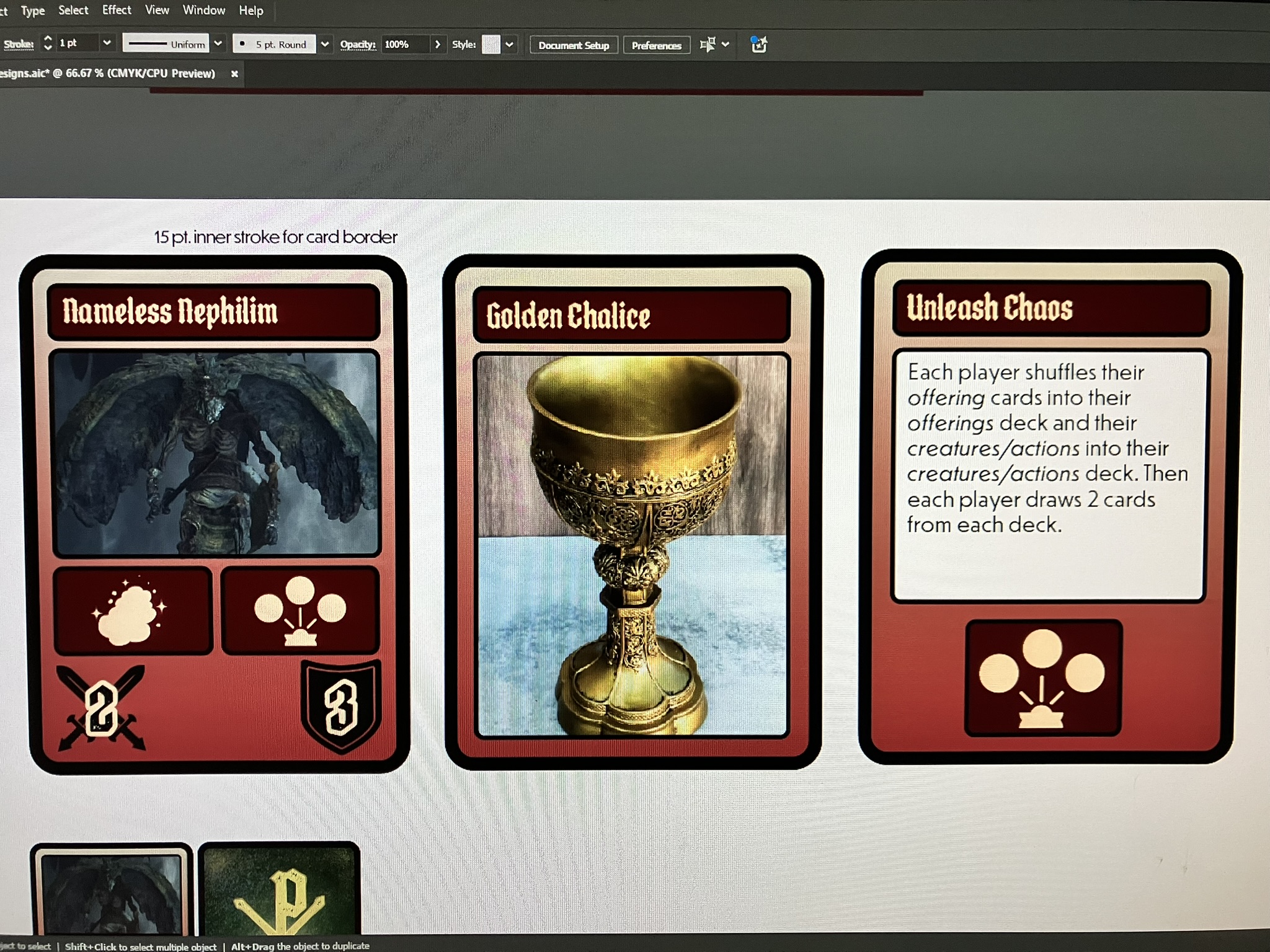
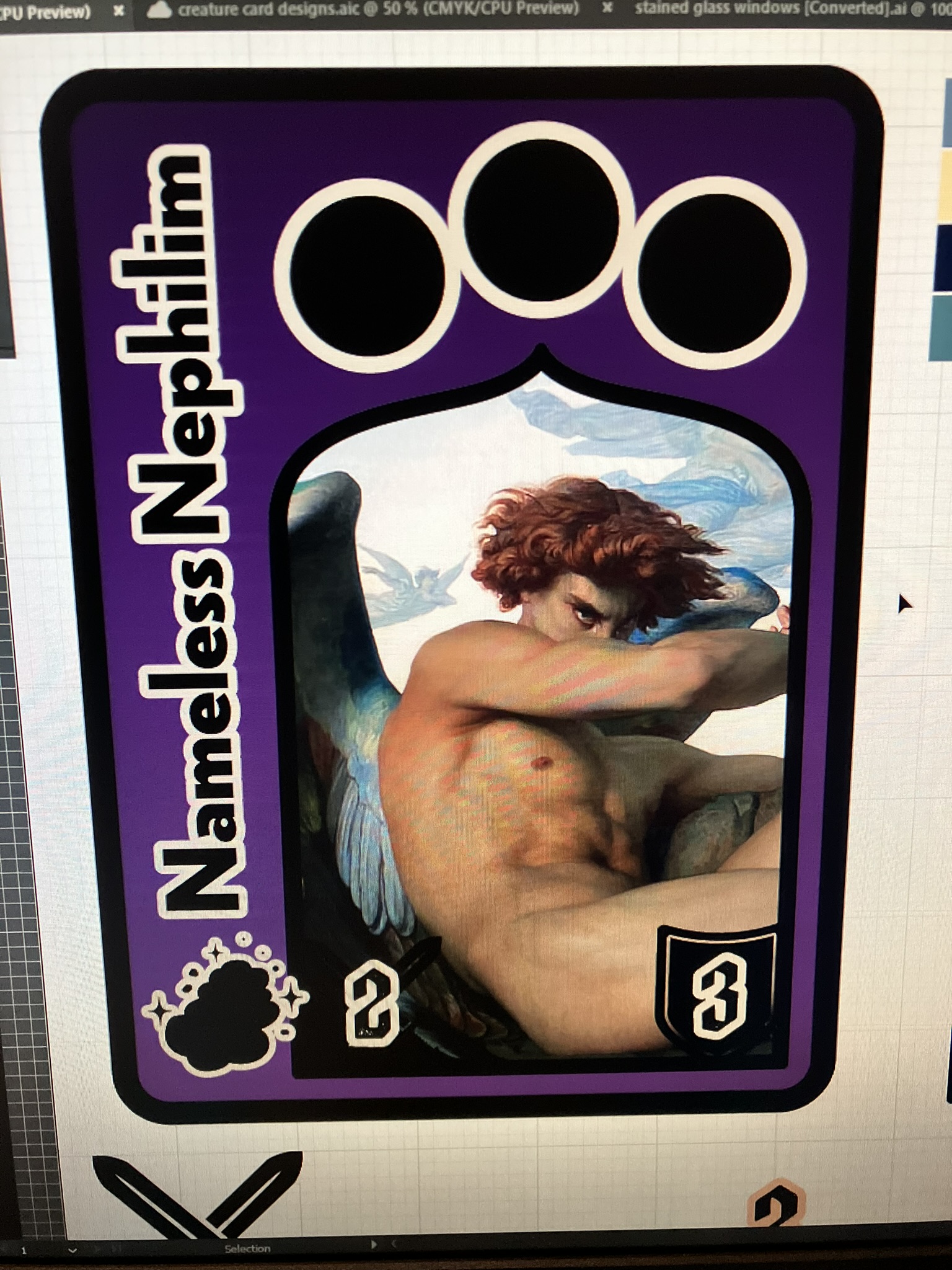
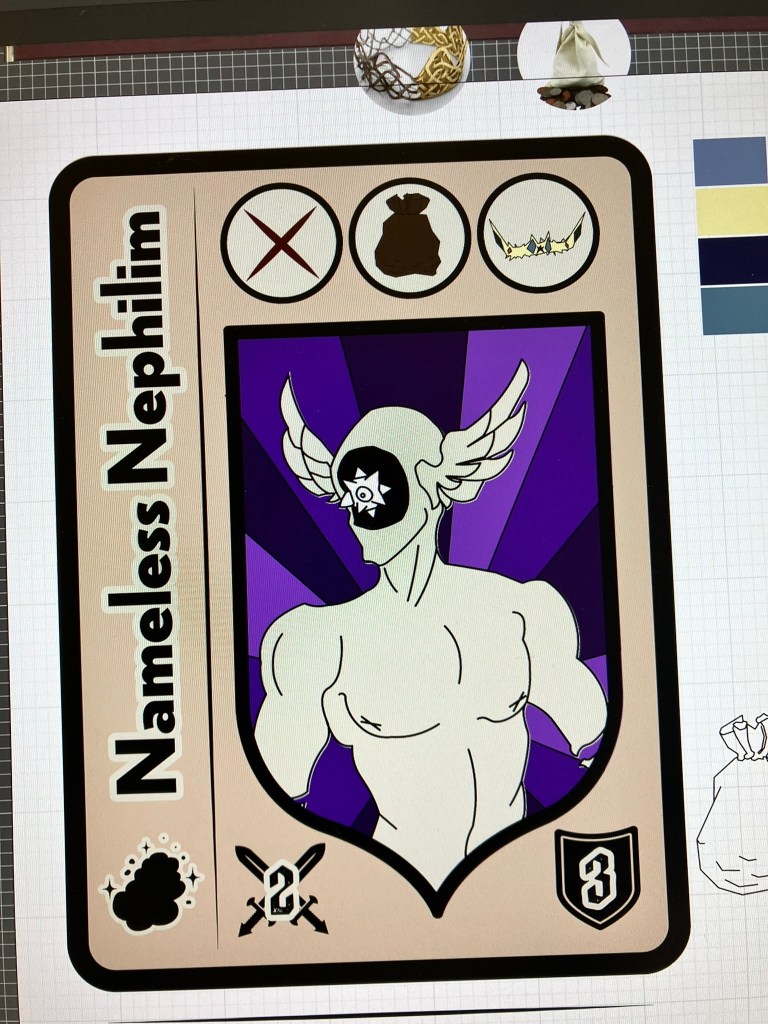
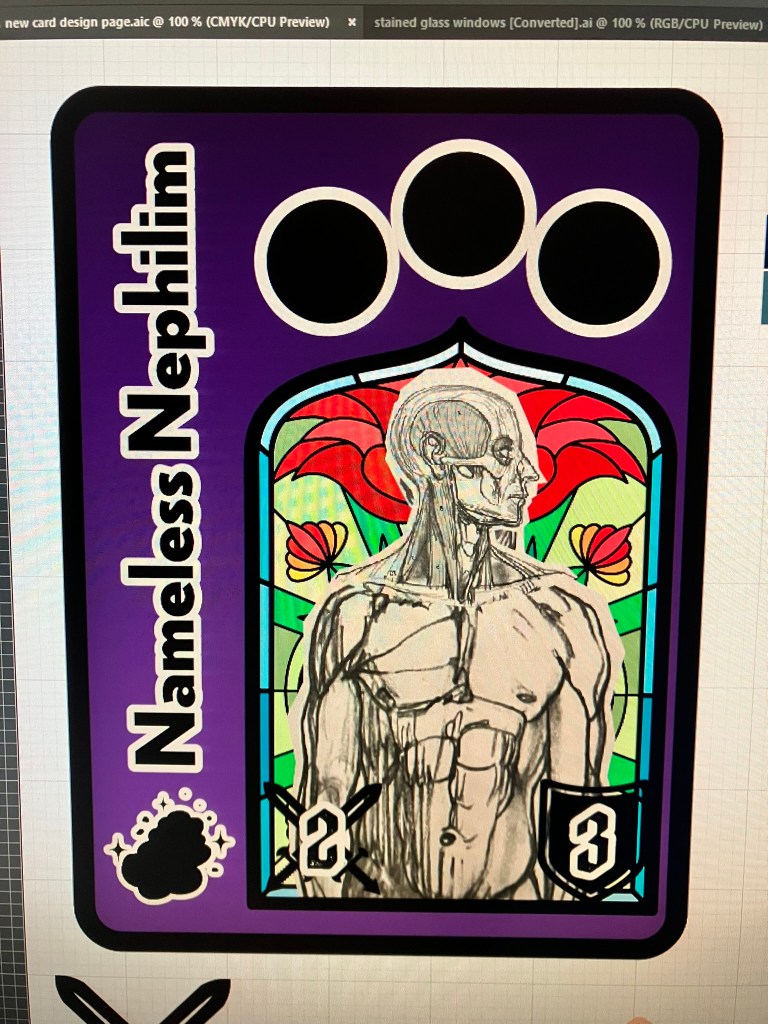
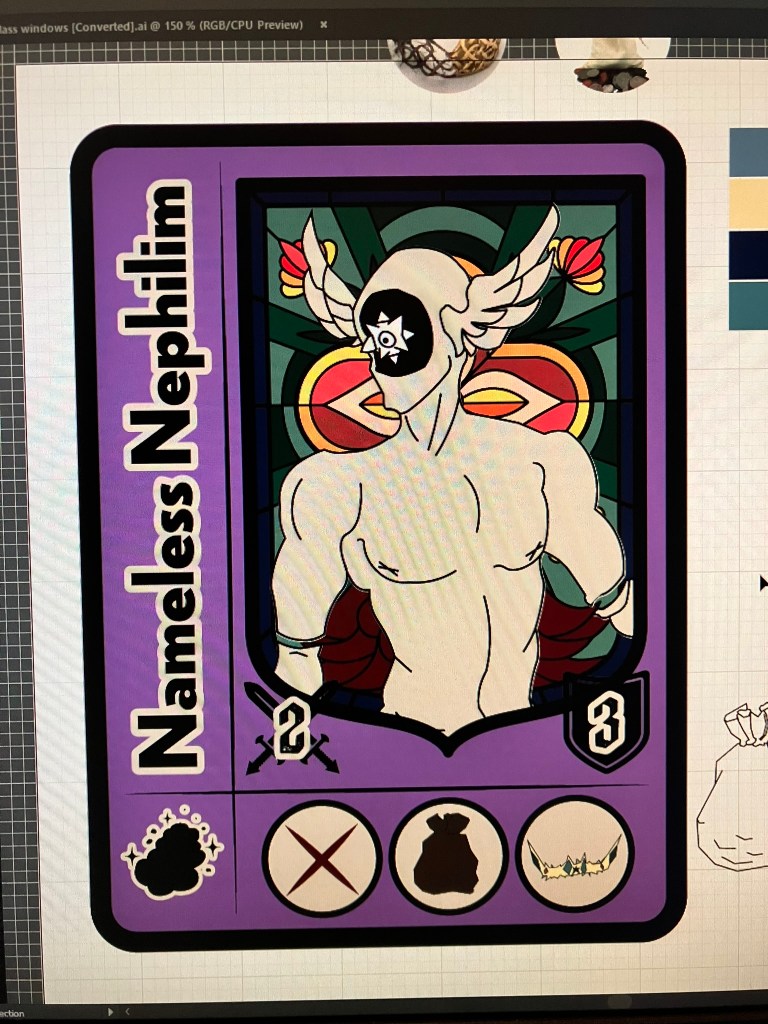
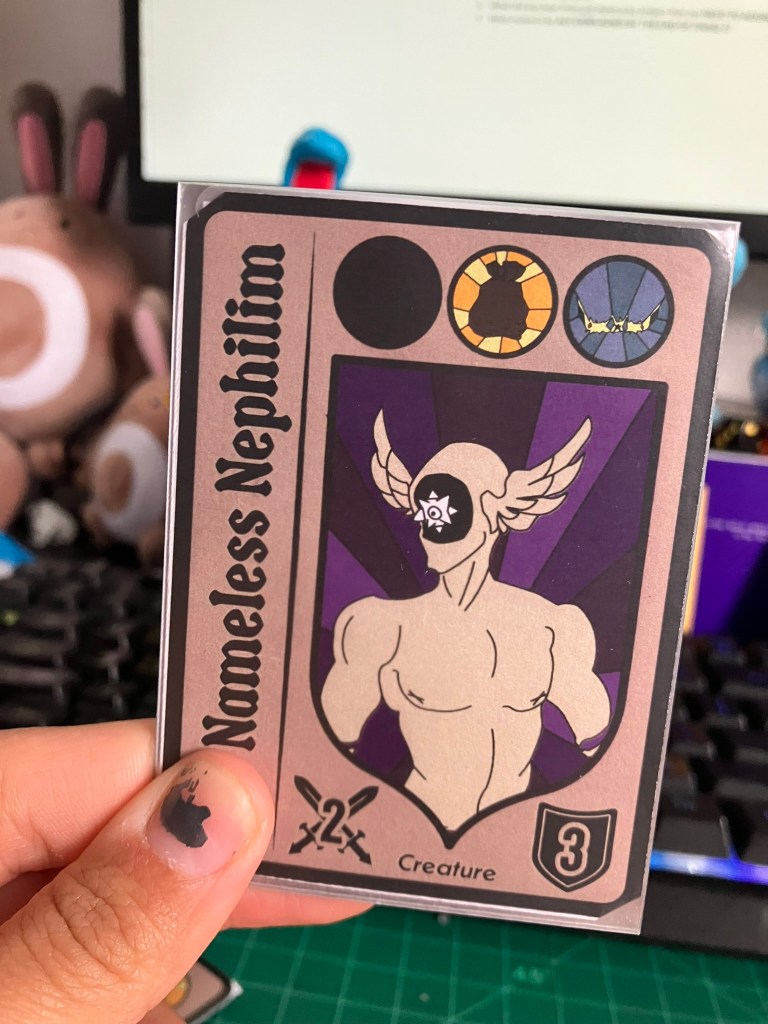
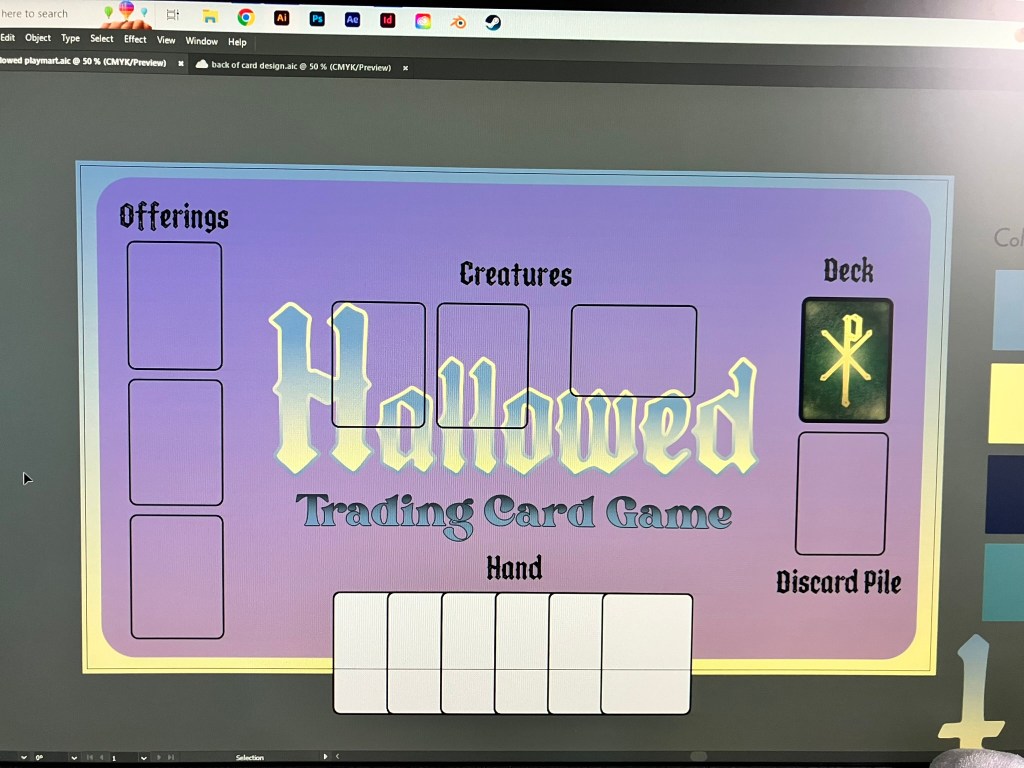
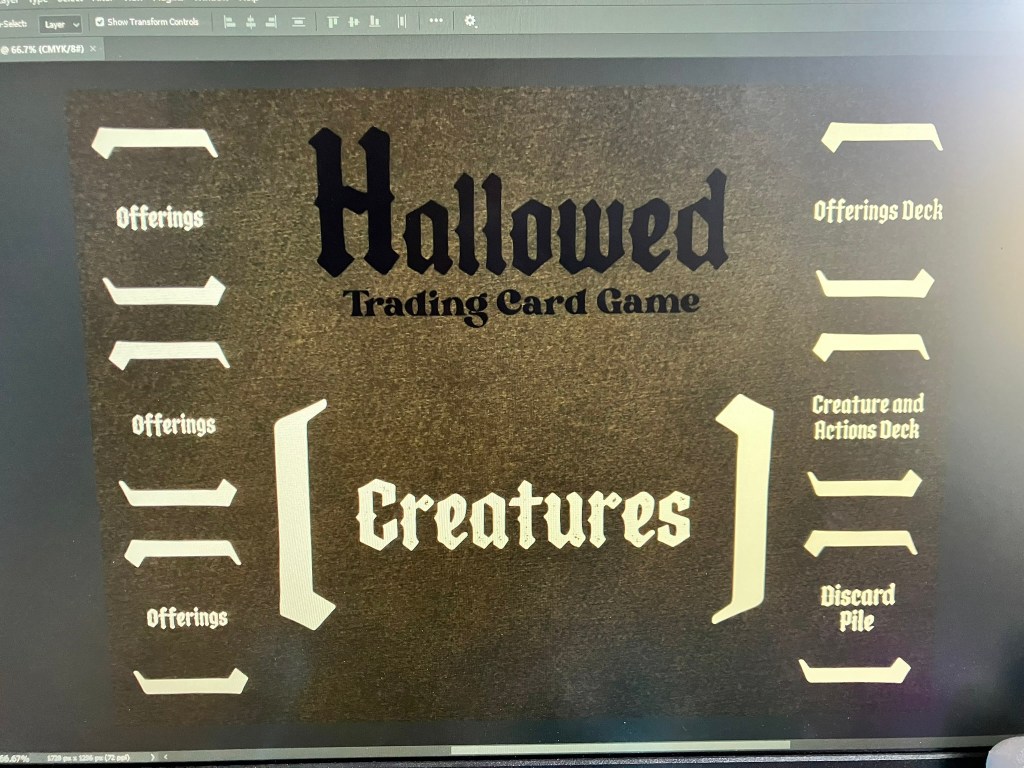
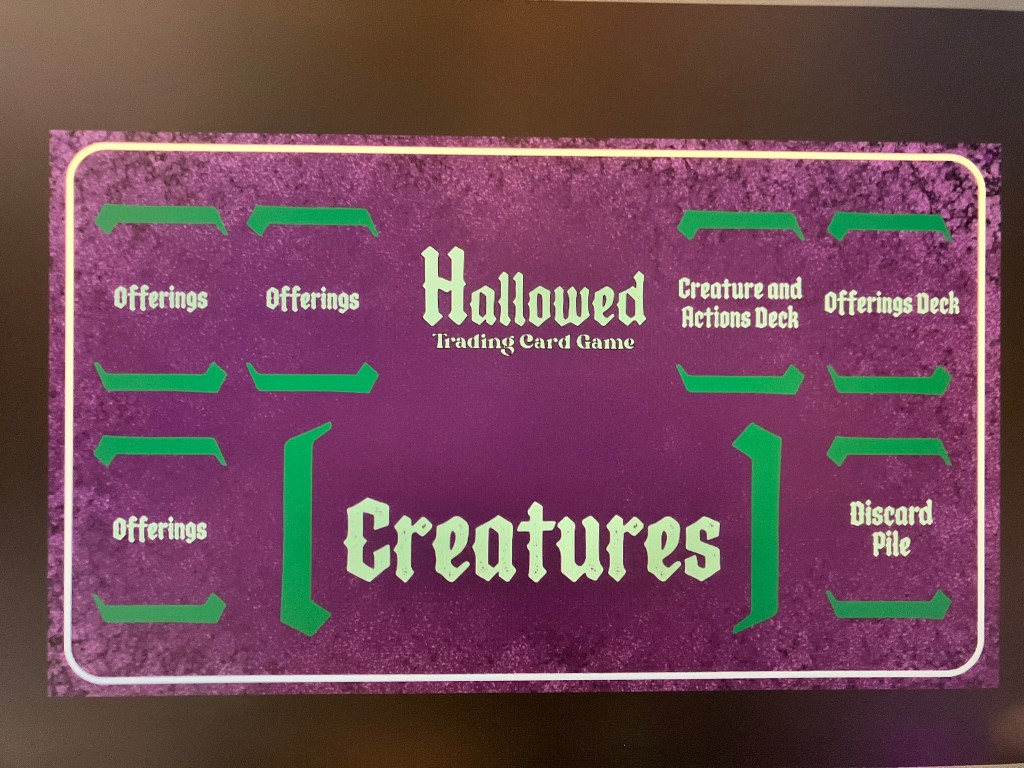
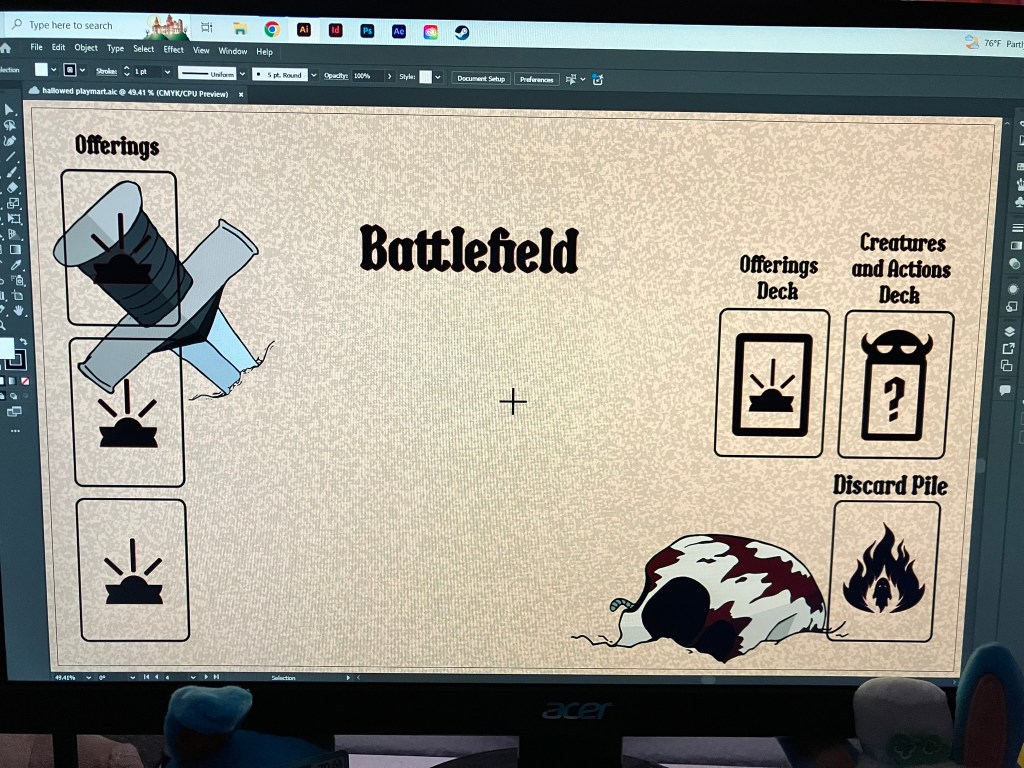
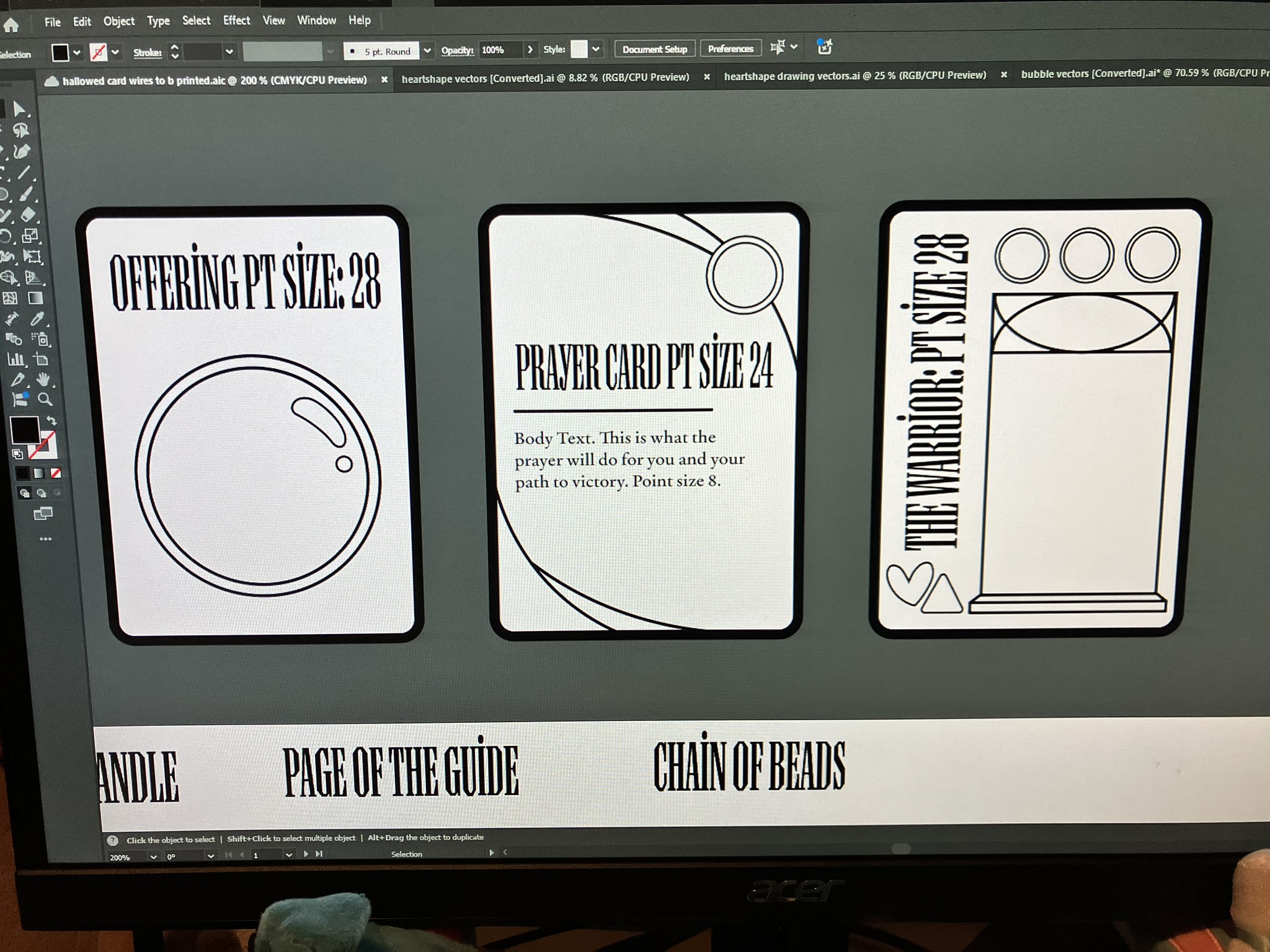
After a few pencil and paper drafts, I moved to digital drafts, which was much more difficult than I imagined. The drafts shown here are very, very, VERY rough, and at this point I was still considering typography, colors, and iconography.
(Digital to printed character card drafts)
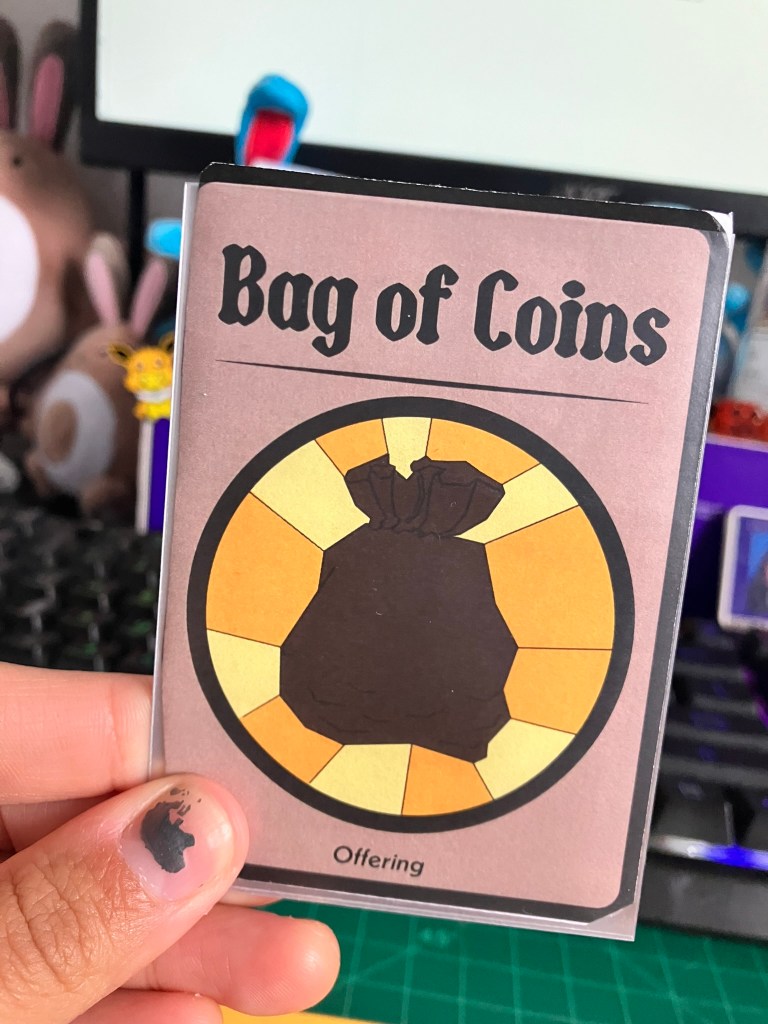
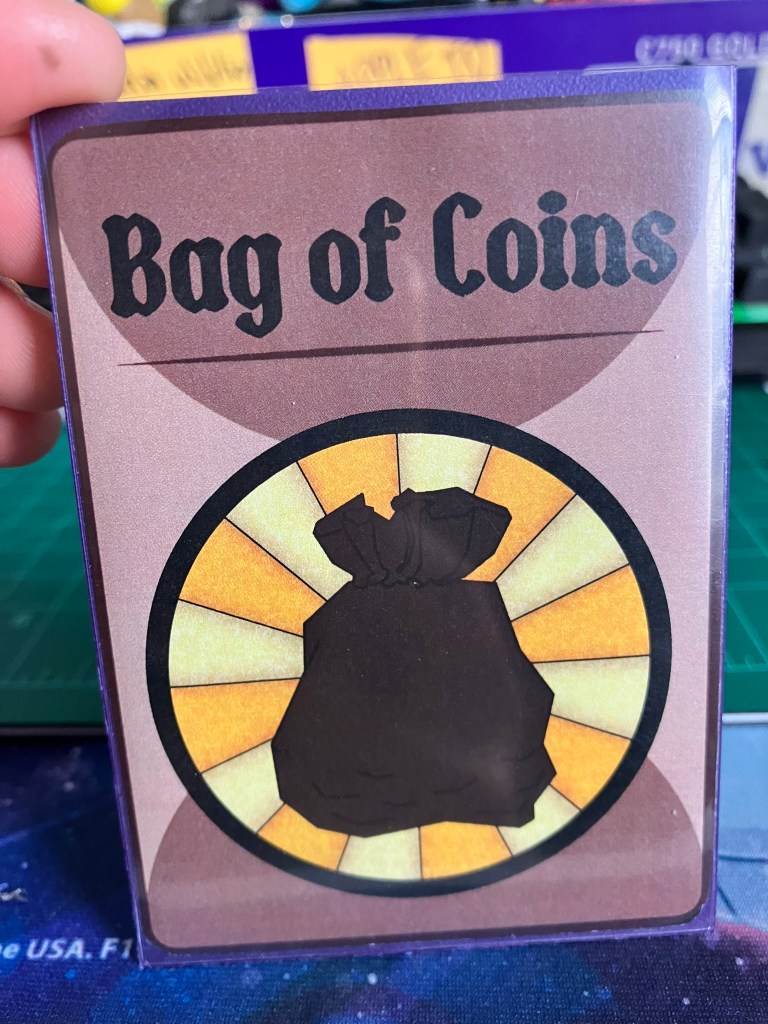
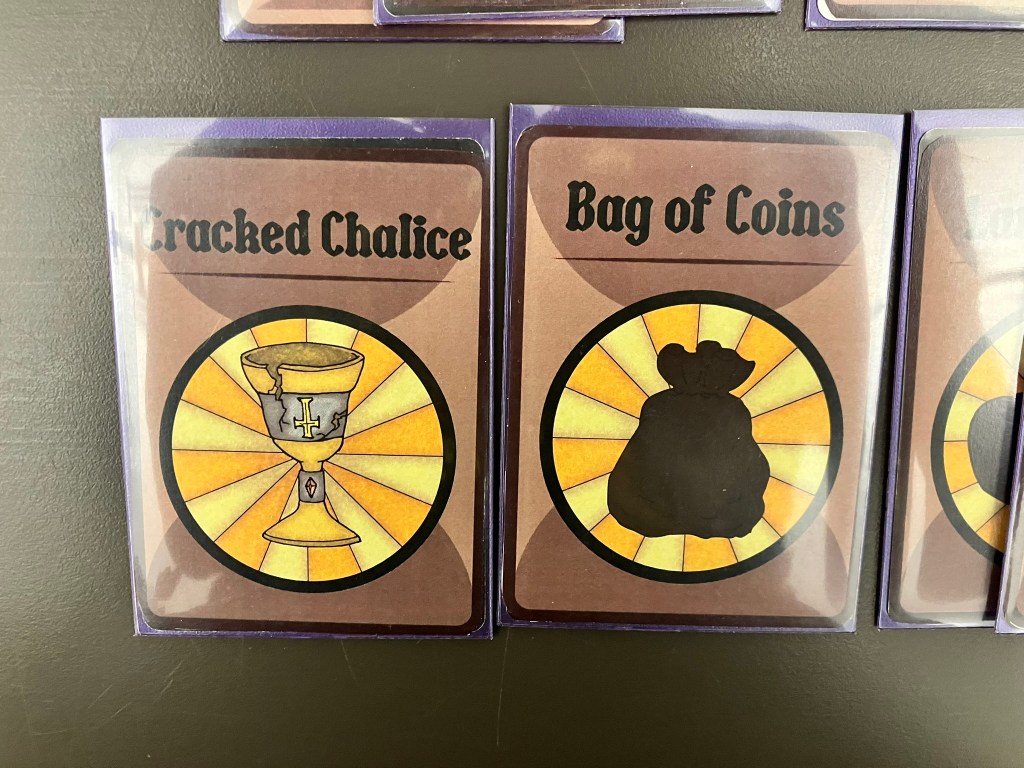
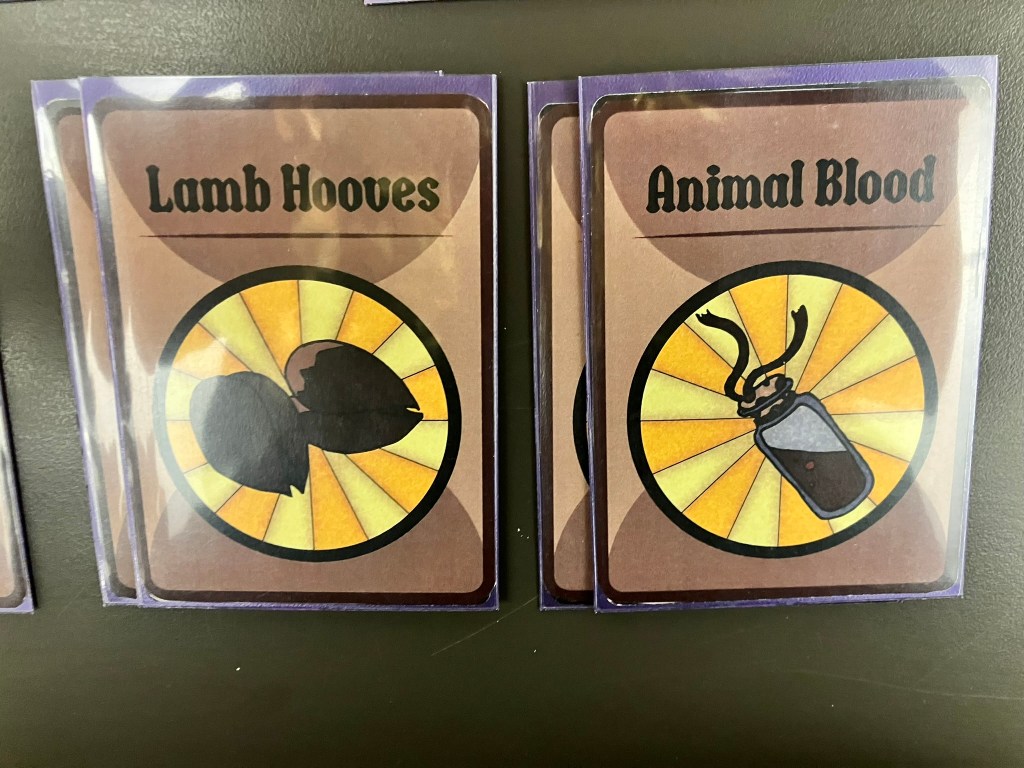
(Digital to printed resource card drafts)
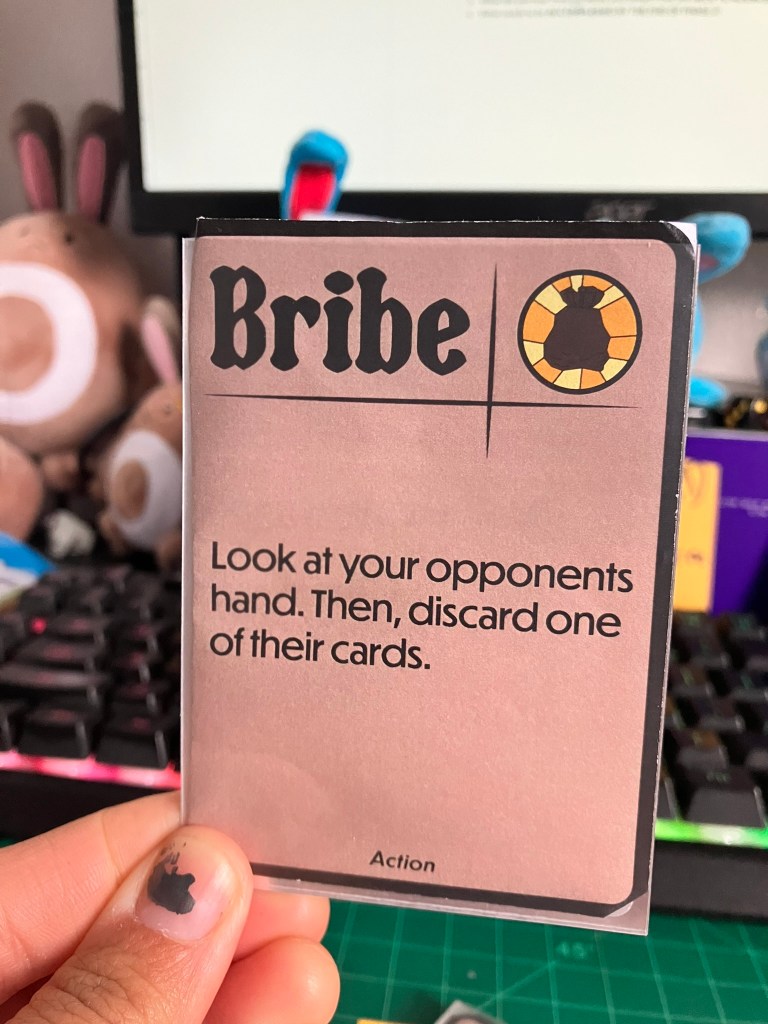
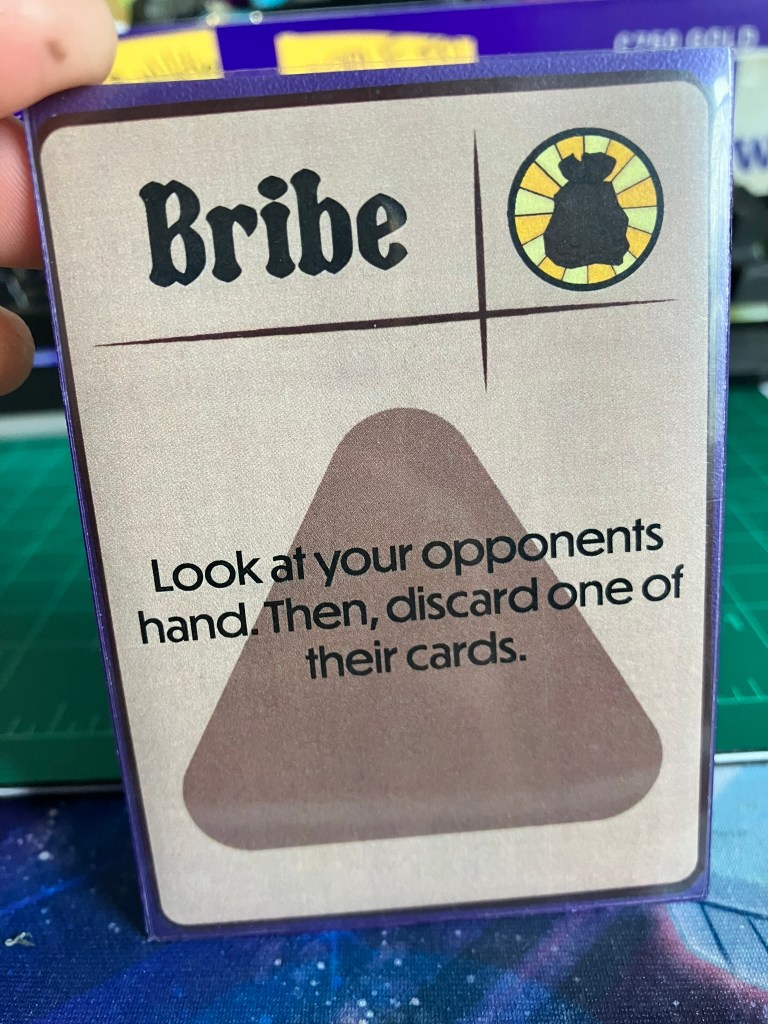
(Digital to printed action card drafts)
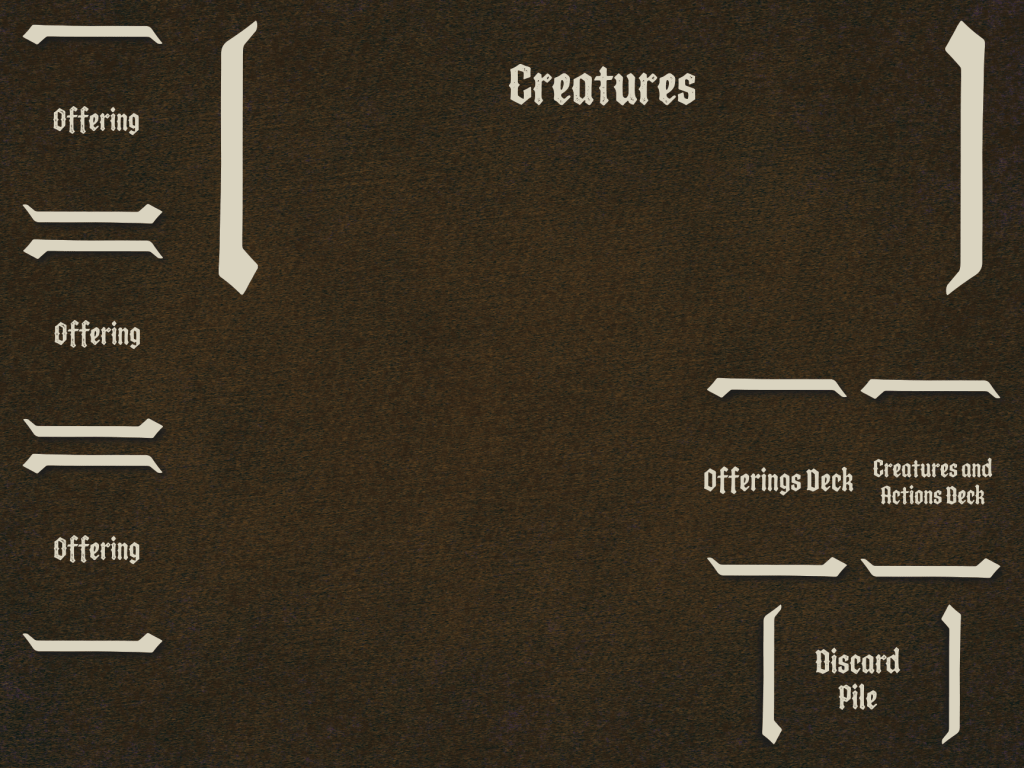
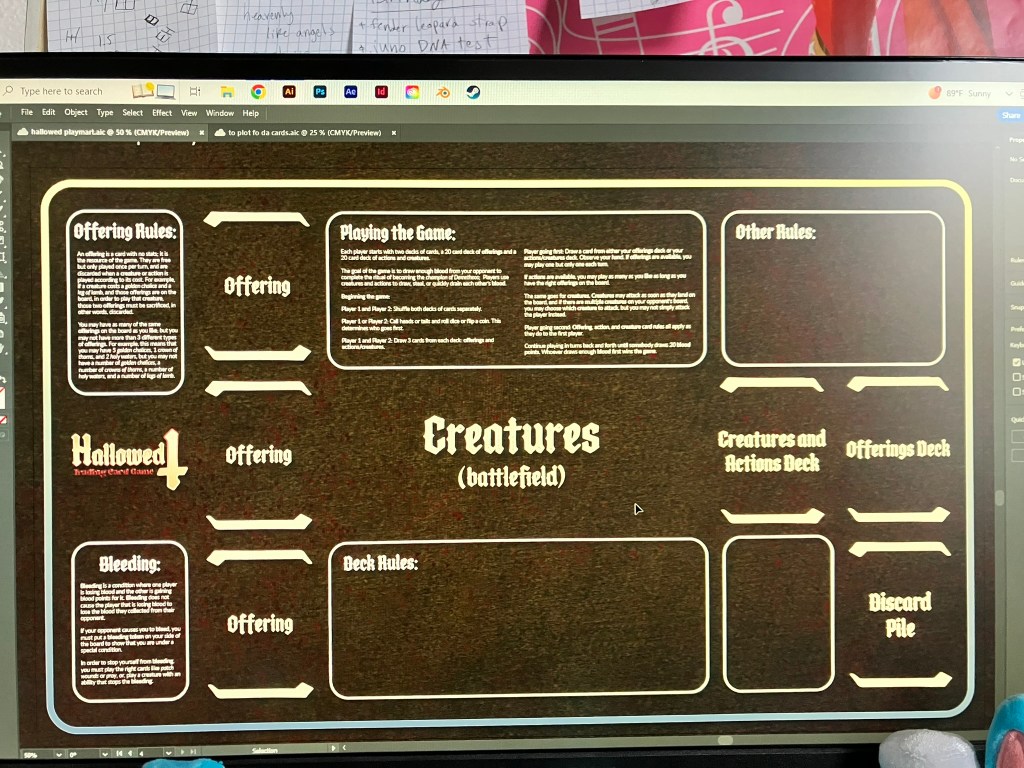
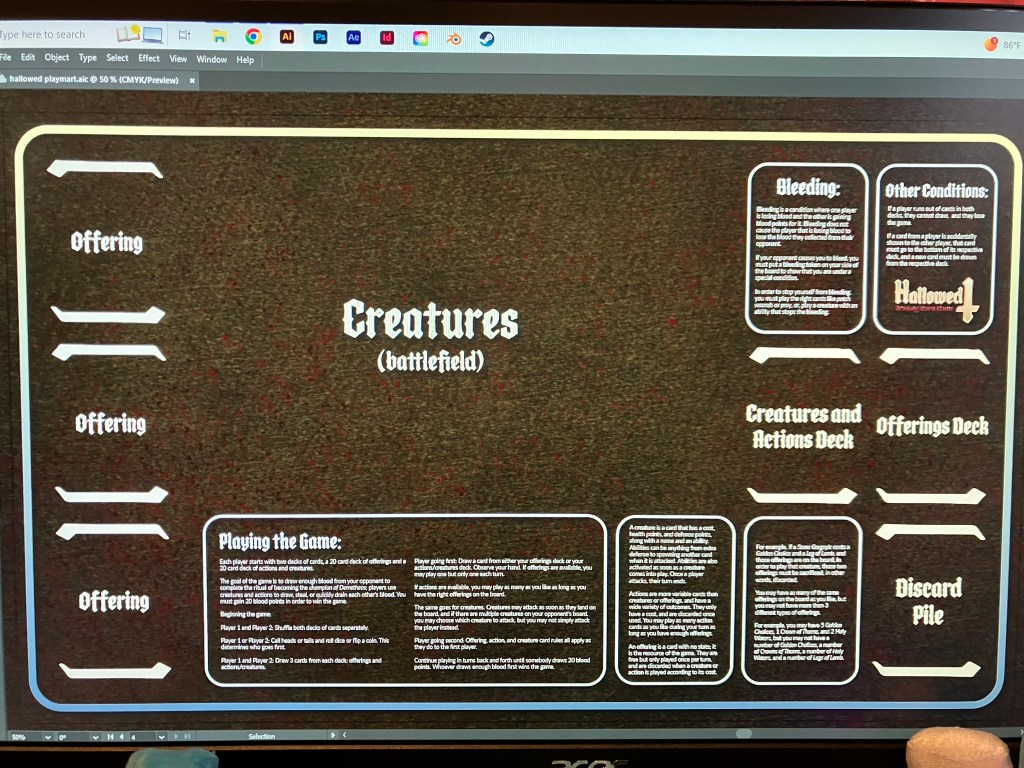
The pressure I had put on myself in making a timeline for the project weighed on me pretty heavily by the time I had gone through numerous card layout drafts, and so I moved on to making playmat drafts. Playmats are common components of competitive trading card games, and typically display the “board state” of the in-game while helping beginner players. Later drafts included large how-to-play blocks of text, but this soon proved to be far too crowded for one canvas, especially when considering the simple aesthetic that the game aimed to achieve.
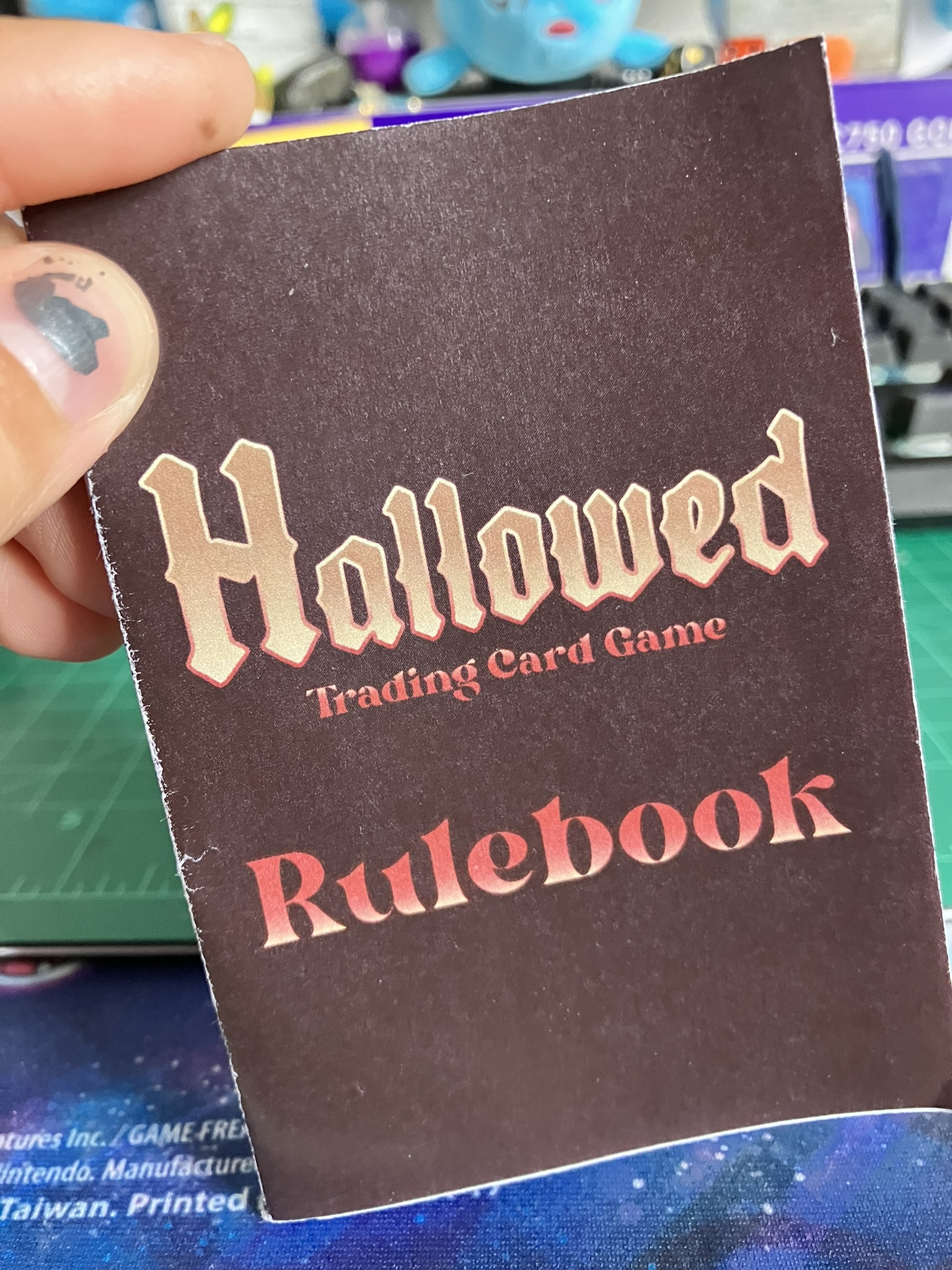
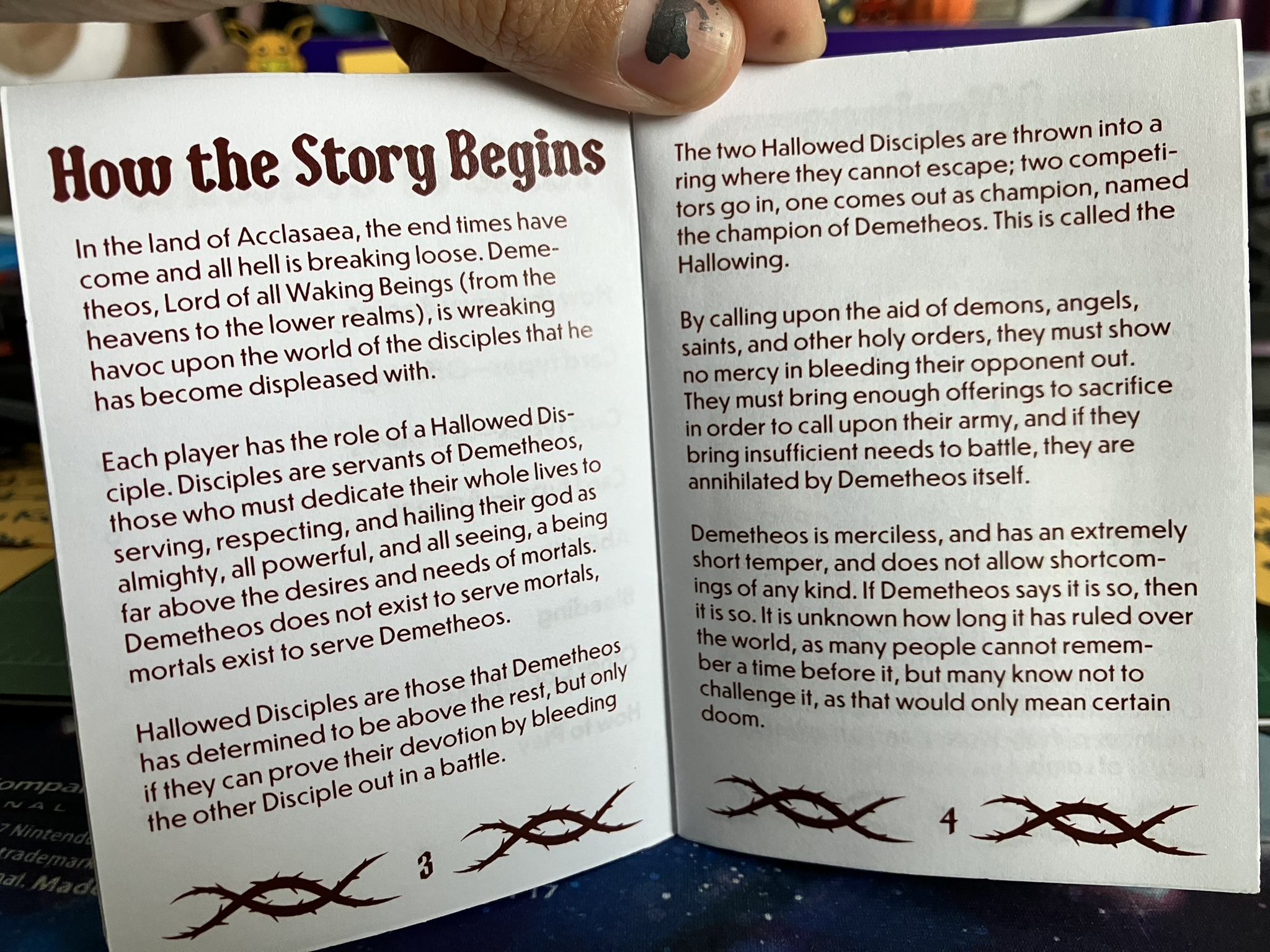
When I had felt a bit burnt out by trying to design the cards and playmat, I shifted gears to focus on a rulebook for the actual game, which included a brief backstory behind some of the characters and in-game items.
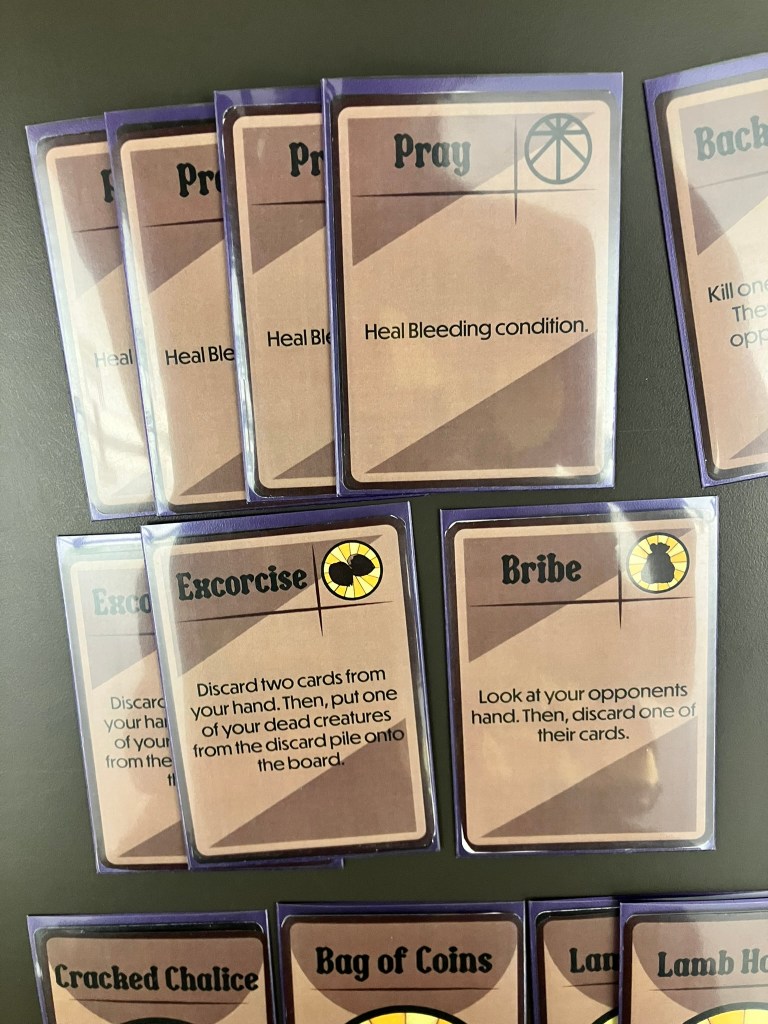
The first three pictures above were the card designs that I felt like I could settle on, as at this point of the year, I had been working on them for months and could not seem to put them down. After a break in visual design and discussions with my professors about the creative direction, I decided on writing an in-game story, lore, if you will. Many of the most popular trading card games have extensive world building, and therefore also have reasons for cards to have specific names.
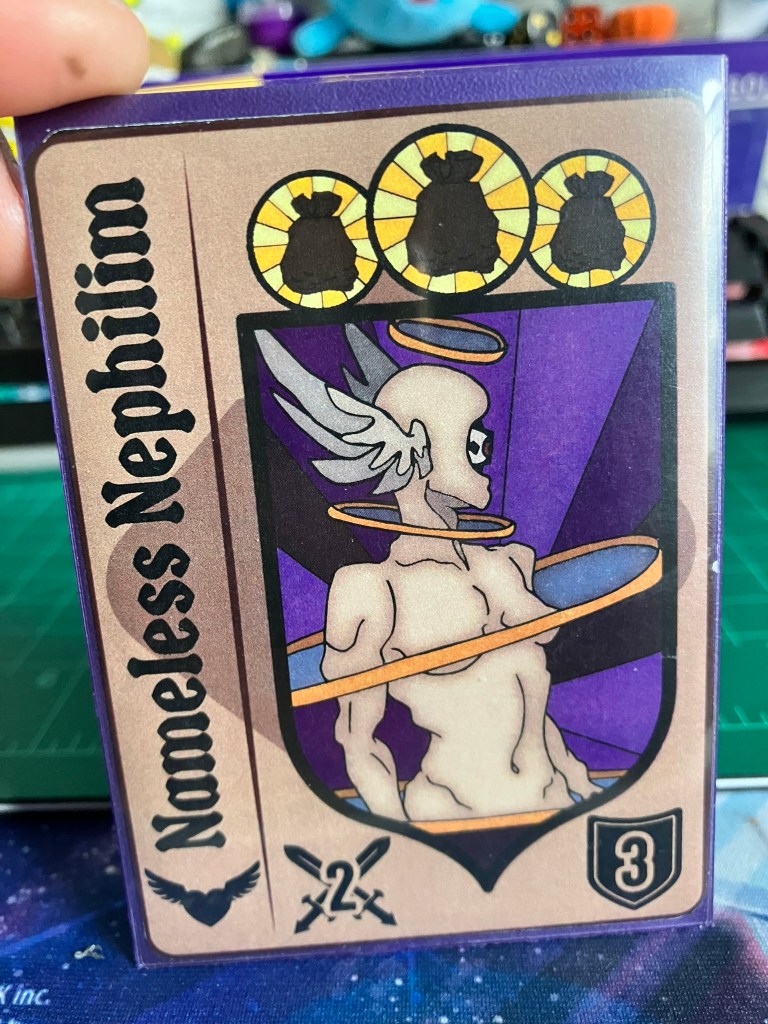
The latter couple of pictures were drafts I had made post-lore break, since I could not shake off the feeling that there was a more efficient way to place all required information on single card layout types. These would eventually serve the finalized versions of the cards, which I felt much better about after scrambling to get everything done in time.
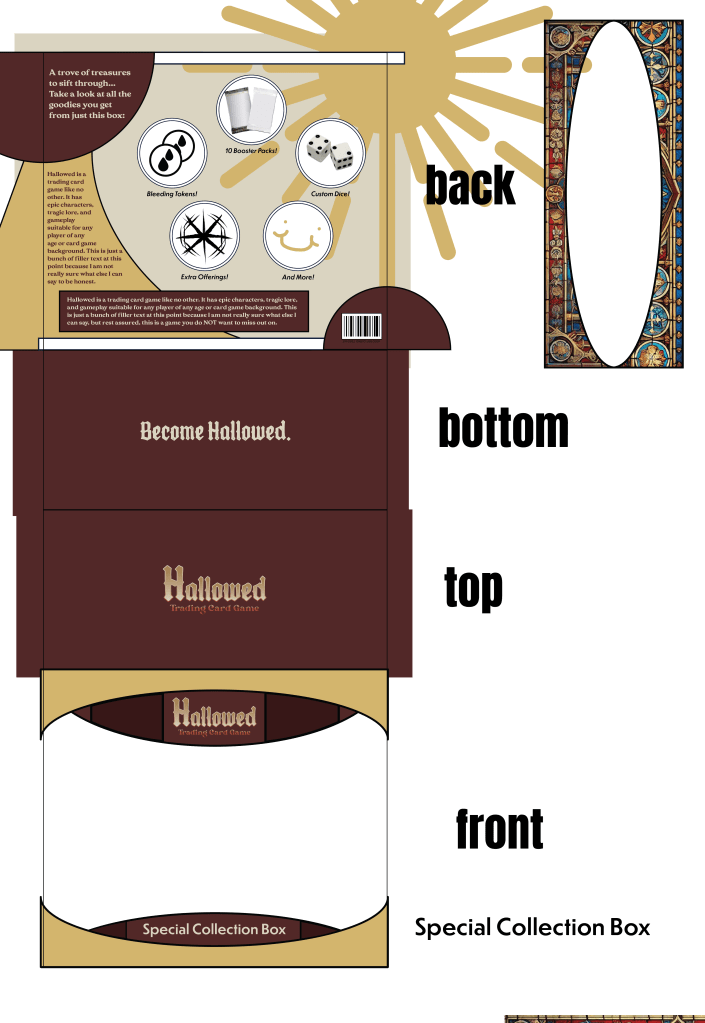
Unused product cover design. Popular trading card games also usually have a special boxed product that contains a set of items like dice, booster packs that contain a random assortment of playable cards, and other physical game items required to play. These are made and sold to help beginner players jump into the game smoothly. The idea was scrapped, again, due to time constraints and the need to focus on other visual designs.